tintti by mika sipurawhats the secret. 83+year man ina poor condition dissappeares,sunday.he's found in good condition same evening, five hours later @kujis75accordingly to Chirch, church no needed varmuuden maksimoi monella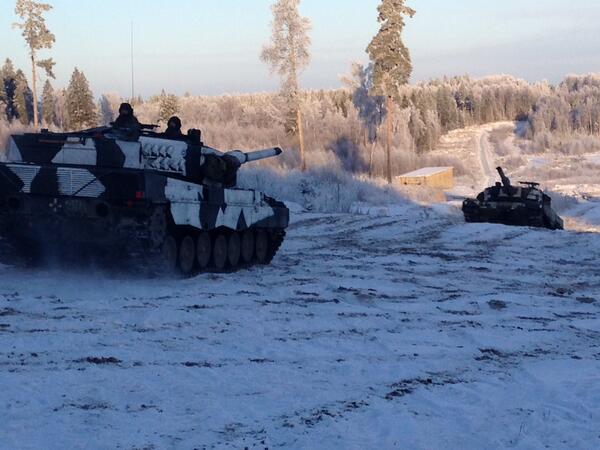
 tintti by mika sipurawhats the secret. 83+year man ina poor condition dissappeares,sunday.he's found in good condition same evening, five hours later @kujis75accordingly to Chirch, church no needed varmuuden maksimoi monella


 Espoolaisesta metsästä löytyi harvinainen jääilmiö - tätä on yritetty selittää jo 1800-luvulta. löytyi myös valkea hirvi.
Julkaistu: 14.1.2014 12:12, päivitetty: 14.1.2014 14:09
HIUSJÄÄTÄ Espoolainen Teemu Mäki-Patola kuvasi viikonvaihteessa harvinaisia jäämuodostumia, joille luonnontutkijat ovat etsineet selitystä 1800-luvun lopulta lähtien.
Teemu Mäki-Patola löysi metsäretkellään lumettomasta metsästä kaatuneen puunrungon, joka näytti olevan tiheän valkoisen turkin peitossa. Tutkiessaan tarkemmin kaatunutta puunrunkoa Mäki-Patola huomasi hiuksenhienoista karvoista muodostuneen turkin olevan jäätä.
KUVA: Teemu Mäki-Patola
Teemu Mäki-Patola löysi espoolaismetsästä hiusjään peittämän puunrungon. Teemu Mäki-Patola löysi espoolaismetsästä hiusjään peittämän puunrungon.
Mäki-Patola oli törmännyt espoolaismetsässä hiusjäänä tunnettuun harvinaiseen luonnonilmiöön, jonka syntymekanismia luonnontutkijat ovat pyrkineet selvittämään 1800-luvun lopulta lähtien.
Lumihiutaleitakin tutkinut Suomen ympäristökeskuksen SYKE:n johtava hydrologi Esko Kuusisto on perehtynyt myös hiusjään muodostumiseen.
KUVA: Teemu Mäki-Patola
Hiusjää vaatii kasvualustakseen lahoavaa puuta, jonka sienirihmastot syöttävät puun pinnalle kosteutta, joka kiteytyy neulasmaisiksi, alhaalta päin kasvaviksi jääkiteiksi. Hiusjää vaatii kasvualustakseen lahoavaa puuta, jonka sienirihmastot syöttävät puun pinnalle kosteutta, joka kiteytyy neulasmaisiksi, alhaalta päin kasvaviksi jääkiteiksi.
- Tämän jäätyypin erikoisuus on se, että eliökunta on mukana jään synnyssä. Lahoavan lehtipuun sisällä on sienirihmastoa, joka lukuisissa kohdissa ulottuu puun pintaan. Kun puu on sisältä sula, mutta ilman lämpötila pakkasella, vesimolekyylit alkavat jäätyä puun pinnalla. Tämä imee lisää kosteutta puun sisältä sienirihmoja pitkin. Vesi jäätyy jokaisen pikkuruisen reiän kohdalta ohueksi hiukseksi, jonka halkaisija on vain millin sadasosan luokkaa, tohtori Kuusisto selittää hiusjään syntyä.
Anna mun kaikki kestää. Vaimo oli tilannut uuden kattolampun.
Saksankielisellä nimellä Haareis tunnetun hiusjään kehitys poikkeaa täysin pakkasella syntyvien kauniiden kuurankukkien synnystä. Kuurankukat syntyvät ilman kosteuden tiivistyessä pakkassäässä tasopinnassa leviäviksi jääkidemuodostelmiksi.
Hiusjää kasvaa alhaalta päin sienirihmastojen syöttäessä puun pinnan ohuita kapillaariputkia pitkin kosteutta puun pinnalle, jossa hiusjää voi kasvaa paksuksi hiusjääkuontaloksi.
- Rihmat tukeutuvat toisiinsa, niitä on niin tiheässä, ettei tuuli pääse niitä katkomaan. Suotuisissa oloissa ne voivat kasvaa
Espoolaisesta metsästä löytyi harvinainen jääilmiö - tätä on yritetty selittää jo 1800-luvulta. löytyi myös valkea hirvi.
Julkaistu: 14.1.2014 12:12, päivitetty: 14.1.2014 14:09
HIUSJÄÄTÄ Espoolainen Teemu Mäki-Patola kuvasi viikonvaihteessa harvinaisia jäämuodostumia, joille luonnontutkijat ovat etsineet selitystä 1800-luvun lopulta lähtien.
Teemu Mäki-Patola löysi metsäretkellään lumettomasta metsästä kaatuneen puunrungon, joka näytti olevan tiheän valkoisen turkin peitossa. Tutkiessaan tarkemmin kaatunutta puunrunkoa Mäki-Patola huomasi hiuksenhienoista karvoista muodostuneen turkin olevan jäätä.
KUVA: Teemu Mäki-Patola
Teemu Mäki-Patola löysi espoolaismetsästä hiusjään peittämän puunrungon. Teemu Mäki-Patola löysi espoolaismetsästä hiusjään peittämän puunrungon.
Mäki-Patola oli törmännyt espoolaismetsässä hiusjäänä tunnettuun harvinaiseen luonnonilmiöön, jonka syntymekanismia luonnontutkijat ovat pyrkineet selvittämään 1800-luvun lopulta lähtien.
Lumihiutaleitakin tutkinut Suomen ympäristökeskuksen SYKE:n johtava hydrologi Esko Kuusisto on perehtynyt myös hiusjään muodostumiseen.
KUVA: Teemu Mäki-Patola
Hiusjää vaatii kasvualustakseen lahoavaa puuta, jonka sienirihmastot syöttävät puun pinnalle kosteutta, joka kiteytyy neulasmaisiksi, alhaalta päin kasvaviksi jääkiteiksi. Hiusjää vaatii kasvualustakseen lahoavaa puuta, jonka sienirihmastot syöttävät puun pinnalle kosteutta, joka kiteytyy neulasmaisiksi, alhaalta päin kasvaviksi jääkiteiksi.
- Tämän jäätyypin erikoisuus on se, että eliökunta on mukana jään synnyssä. Lahoavan lehtipuun sisällä on sienirihmastoa, joka lukuisissa kohdissa ulottuu puun pintaan. Kun puu on sisältä sula, mutta ilman lämpötila pakkasella, vesimolekyylit alkavat jäätyä puun pinnalla. Tämä imee lisää kosteutta puun sisältä sienirihmoja pitkin. Vesi jäätyy jokaisen pikkuruisen reiän kohdalta ohueksi hiukseksi, jonka halkaisija on vain millin sadasosan luokkaa, tohtori Kuusisto selittää hiusjään syntyä.
Anna mun kaikki kestää. Vaimo oli tilannut uuden kattolampun.
Saksankielisellä nimellä Haareis tunnetun hiusjään kehitys poikkeaa täysin pakkasella syntyvien kauniiden kuurankukkien synnystä. Kuurankukat syntyvät ilman kosteuden tiivistyessä pakkassäässä tasopinnassa leviäviksi jääkidemuodostelmiksi.
Hiusjää kasvaa alhaalta päin sienirihmastojen syöttäessä puun pinnan ohuita kapillaariputkia pitkin kosteutta puun pinnalle, jossa hiusjää voi kasvaa paksuksi hiusjääkuontaloksi.
- Rihmat tukeutuvat toisiinsa, niitä on niin tiheässä, ettei tuuli pääse niitä katkomaan. Suotuisissa oloissa ne voivat kasvaa ainakin kymmenen sentin pituisiksi, Kuusisto kuvaa hiusjään kasvua.
KUVA: Teemu Mäki-Patola
Hiusjään yksittäiset suortuvat ovat vain 0,01 milliä paksuja ja voivat kasvaa 10 senttiä pitkiksi. Hiusjään yksittäiset suortuvat ovat vain 0,01 milliä paksuja ja voivat kasvaa 10 senttiä pitkiksi.
Jääkiteiden kasvu neulasmaisiksi pilareiksi vaatii sopivaa lämpötilaa, sillä jääkiteiden kasvusuunta riippuu lämpötilasta.
Lumikiteiden muodostumisen fysiikkaa tutkineen Kenneth Libbrechtin mukaan noin -4 asteesta -10 asteeseen jääkiteet kasvavat pituussuuntaan pilareiksi. Kymmenestä pakkasasteesta noin -22 asteeseen jääkiteet kasvavat perusrakenteeltaan kuusikulmaisiksi levyiksi. Yli 22 asteen pakkasessa syntyy sekä kidepilareita että levyjä.
Libbrechtin seikkaperäinen selvitys lumikiteiden muodostumisen fysiikasta ilmestyi vuonna 2005 Reports on Progress in Physics -julkaisusarjassa (The physics of snow crystals).
- Hiusjäätä ei ole tavattu havupuulla, mutta useimmilla lehtipuulajeilla sitä esiintyy. Puun pitää olla jonkinasteisessa lahoamistilassa. Puusta siirtyy veden mukana hiusjäähän runsaasti orgaanista ainetta. Kun hiusjäätä sulattaa, veden hiilipitoisuus on korkea. Hiusjää ei myöskään tipahtele sulaessaan 'klöntteinä' puusta irti niinkuin muu puun pinnalle muodostunut jää usein tekee, Esko Kuusisto selittää hiusjään esiintymistä.
- Ilmiö tunnetaan monista maista, sitä ovat tutkijat pohtineet jo 1880-luvulla. Eniten havaintoja taitaa olla Saksasta ja USAn länsiosista. Hiusjäästä on havaintoja myös Suomesta, minullekin on lähetetty kerran kuvia Jyväskylän lähistöltä, Kuusisto kertoo IS:lle.
Ensimmäisen kerran hiusjäätä käsiteltiin luonnontieteellisissä julkaisuissa jo vuonna 1884 Nature-lehdessä julkaistussa raportissa, jossa professori Schwable kuvasi Harz-vuoristosta löytämissään risuissa kasvaneita jäämuodostumia.
Illinoisin valtionyliopiston maantieteen ja geologian laitoksen emeritus-professori James R. Carter on tutkinut hiusjäätä ja sen esiintymistä eri puolilla maailmaa. Hänen julkaisemansa tutkimuksen mukaan hiusjäätä näyttää esiintyvän vain Euroopassa, Pohjois-Amerikan luoteisosissa ja yhdessä Kanadan itäisessä provinssissa.
Professori Carter mukaan sienirihmastojen ja hiusjään esiintymisen välinen maantieteellinen yhteys vaatii jatkotutkimuksia.tassa sappagettijaata
ainakin kymmenen sentin pituisiksi, Kuusisto kuvaa hiusjään kasvua.
KUVA: Teemu Mäki-Patola
Hiusjään yksittäiset suortuvat ovat vain 0,01 milliä paksuja ja voivat kasvaa 10 senttiä pitkiksi. Hiusjään yksittäiset suortuvat ovat vain 0,01 milliä paksuja ja voivat kasvaa 10 senttiä pitkiksi.
Jääkiteiden kasvu neulasmaisiksi pilareiksi vaatii sopivaa lämpötilaa, sillä jääkiteiden kasvusuunta riippuu lämpötilasta.
Lumikiteiden muodostumisen fysiikkaa tutkineen Kenneth Libbrechtin mukaan noin -4 asteesta -10 asteeseen jääkiteet kasvavat pituussuuntaan pilareiksi. Kymmenestä pakkasasteesta noin -22 asteeseen jääkiteet kasvavat perusrakenteeltaan kuusikulmaisiksi levyiksi. Yli 22 asteen pakkasessa syntyy sekä kidepilareita että levyjä.
Libbrechtin seikkaperäinen selvitys lumikiteiden muodostumisen fysiikasta ilmestyi vuonna 2005 Reports on Progress in Physics -julkaisusarjassa (The physics of snow crystals).
- Hiusjäätä ei ole tavattu havupuulla, mutta useimmilla lehtipuulajeilla sitä esiintyy. Puun pitää olla jonkinasteisessa lahoamistilassa. Puusta siirtyy veden mukana hiusjäähän runsaasti orgaanista ainetta. Kun hiusjäätä sulattaa, veden hiilipitoisuus on korkea. Hiusjää ei myöskään tipahtele sulaessaan 'klöntteinä' puusta irti niinkuin muu puun pinnalle muodostunut jää usein tekee, Esko Kuusisto selittää hiusjään esiintymistä.
- Ilmiö tunnetaan monista maista, sitä ovat tutkijat pohtineet jo 1880-luvulla. Eniten havaintoja taitaa olla Saksasta ja USAn länsiosista. Hiusjäästä on havaintoja myös Suomesta, minullekin on lähetetty kerran kuvia Jyväskylän lähistöltä, Kuusisto kertoo IS:lle.
Ensimmäisen kerran hiusjäätä käsiteltiin luonnontieteellisissä julkaisuissa jo vuonna 1884 Nature-lehdessä julkaistussa raportissa, jossa professori Schwable kuvasi Harz-vuoristosta löytämissään risuissa kasvaneita jäämuodostumia.
Illinoisin valtionyliopiston maantieteen ja geologian laitoksen emeritus-professori James R. Carter on tutkinut hiusjäätä ja sen esiintymistä eri puolilla maailmaa. Hänen julkaisemansa tutkimuksen mukaan hiusjäätä näyttää esiintyvän vain Euroopassa, Pohjois-Amerikan luoteisosissa ja yhdessä Kanadan itäisessä provinssissa.
Professori Carter mukaan sienirihmastojen ja hiusjään esiintymisen välinen maantieteellinen yhteys vaatii jatkotutkimuksia.tassa sappagettijaata Software company Microsoft is doing the rounds of Finnish bars and eateries in search of bankable talent. The company's regional tour started Monday morning in Kajaani


 The Situationist International (SI) was an international organization of social revolutionaries, the exclusive membership of which was made up of avant-garde artists, intellectuals, and political theorists, active from its formation in 1957 to its dissolution in 1972.[2]The situationists observed that the worker of advanced capitalism still only functions with the goal of survival. In a world where technological efficiency has increased production exponentially, by tenfold, the workers of society still dedicate the whole of their lives to survival, by way of production. The purpose for which advanced capitalism is organized isn't luxury, happiness, or freedom, but production. The production of commodities is an end to itself; and production by way of survival.
The theorists of the Situationist International regarded the current paradigm of work in advanced capitalist society as increasingly absurd. As technology progresses, and work becomes exponentially efficient, the work itself becomes exponentially more trivial. The spectacle's social function Under section 5 of the Companies Act 2006, new companies cannot be formed as a company limited by guarantee with a share capitalis the concrete manufacture of alienation. Economic expansion consists primarily of the expansion of this particular sector of industrial production. The "growth" generated by an economy developing for its own sake can be nothing other than a growth of the very alienation that was at its origin.Critical Mass has been described as "monthly political-protest rides", and characterized as being part of a social movement.[3] It has been described as a "monthly protest by cyclists reclaiming the streets."[4] Participants have insisted that these events should be viewed as "celebrations" and spontaneous gatherings, and not as protests or organized demonstrations.[5][6] This stance allows Critical Mass to argue a legal position that its events can occur without advance notification of local police.[7][8]
LLLLLLLLLLLLLLLLLLLLLLLLLLLStratifikaatiolla tarkoitetaan sosiologiassa yhteiskunnallista kerrostuneisuutta, hierarkiaa, jossa joillakin yhteiskunnan jäsenillä on etuoikeutettu asema vallan ja vaurauden perusteella. Kerrostuneisuus esiintyy monissa eri muodoissa. Jotkin jaon perusteet ovat hyvin vanhoja, kuten Intian kastijärjestelmä tai säädyt Euroopassa, toiset ovat myöhempää perua, kuten käsite yhteiskuntaluokka, joka alkoi muotoutua vasta kapitalismin myötä.
Moderneissa länsimaisissa yhteiskunnissa kerrostuneisuutta määritellään yleensä tulotason perusteella. Esimerkiksi keskiluokalla tarkoitetaan yleensä hyvin toimeentulevia ihmisiä, jotka kokevat olonsa yhteiskunnassa taloudellisesti turvatuksi. Alaluokan ja yläluokan käsitteitä käytetään tavallisesti halventavassa merkityksessä. Kuitenkin tuloerojen kasvamisen myötä suomalaisessa luokkakeskustelussa on ryhdytty käyttämään termejä köyhät ja rikkaat niistä ihmisryhmistä, jotka eivät kuulu keskiluokkaan.[1]
Työväenluokka on historiallinen käsite, jolla viitataan alemman sosiaaliryhmän jäseniin, jotka tekevät fyysistä työtä. Nykyisin määritteleväksi stratifikaation piirteeksi on muotoutunut työn pysyvyys; prekariaatti-käsite kuvaa tilapäisissä tai epätyypillisissä työsuhteissa olevien ihmisten luokkaa.
Nykyisin yhteiskunnallista kerrostuneisuutta epätasa-arvoa pyritään selittämään erilaisten konfliktiteorioiden avulla.lllllllllllllllllllLLLLLLLLLLLLLLLLLLLLL
a dérive is an unplanned journey through a landscape, usually urban, on which the subtle aesthetic contours of the surrounding architecture and geography subconsciously direct the travellers, with the ultimate goal of encountering an entirely new and authentic experience. Situationist theorist Guy Debord defines the dérive as "a mode of experimental behavior linked to the conditions of urban society: a technique of rapid passage through varied ambiances." He also notes that "the term also designates a specific uninterrupted period of dériving."[1]
Figure 1-3. Cartoonist Robert Crumb predicted Twitter in the 1960slllllllll If so, we wanna show your work at the New Orleans Anarchist BookfairLLLClass conflict, frequently referred to as class warfare or class struggle, is the tension or antagonism which exists in society due to competing socioeconomic interests and desires between people of different classes.
Class conflict can take many different forms: direct violence, such as wars fought for resources and cheap labor; indirect violence, such as deaths from poverty, starvation, illness or unsafe working conditions; coercion, such as the threat of losing a job or pulling an important investment; or ideology, either intentionally (as with books and articles promoting capitalism) or unintentionally (as with the promotion of consumerism through advertising). Additionally, political forms of class conflict exist; legally or illegally lobbying or bribing government leaders for passage of partisan desirable legislation including labor laws, tax codes, consumer laws, acts of congress or other sanction, injunction or tariff. The conflict can be open, as with a lockout aimed at destroying a labor union, or hidden, as with an informal slowdown in production protesting low wages or unfair labor practices.LLLLLLLLLLLLLLLLLLLLLLLLLL
The Situationist International (SI) was an international organization of social revolutionaries, the exclusive membership of which was made up of avant-garde artists, intellectuals, and political theorists, active from its formation in 1957 to its dissolution in 1972.[2]The situationists observed that the worker of advanced capitalism still only functions with the goal of survival. In a world where technological efficiency has increased production exponentially, by tenfold, the workers of society still dedicate the whole of their lives to survival, by way of production. The purpose for which advanced capitalism is organized isn't luxury, happiness, or freedom, but production. The production of commodities is an end to itself; and production by way of survival.
The theorists of the Situationist International regarded the current paradigm of work in advanced capitalist society as increasingly absurd. As technology progresses, and work becomes exponentially efficient, the work itself becomes exponentially more trivial. The spectacle's social function Under section 5 of the Companies Act 2006, new companies cannot be formed as a company limited by guarantee with a share capitalis the concrete manufacture of alienation. Economic expansion consists primarily of the expansion of this particular sector of industrial production. The "growth" generated by an economy developing for its own sake can be nothing other than a growth of the very alienation that was at its origin.Critical Mass has been described as "monthly political-protest rides", and characterized as being part of a social movement.[3] It has been described as a "monthly protest by cyclists reclaiming the streets."[4] Participants have insisted that these events should be viewed as "celebrations" and spontaneous gatherings, and not as protests or organized demonstrations.[5][6] This stance allows Critical Mass to argue a legal position that its events can occur without advance notification of local police.[7][8]
LLLLLLLLLLLLLLLLLLLLLLLLLLLStratifikaatiolla tarkoitetaan sosiologiassa yhteiskunnallista kerrostuneisuutta, hierarkiaa, jossa joillakin yhteiskunnan jäsenillä on etuoikeutettu asema vallan ja vaurauden perusteella. Kerrostuneisuus esiintyy monissa eri muodoissa. Jotkin jaon perusteet ovat hyvin vanhoja, kuten Intian kastijärjestelmä tai säädyt Euroopassa, toiset ovat myöhempää perua, kuten käsite yhteiskuntaluokka, joka alkoi muotoutua vasta kapitalismin myötä.
Moderneissa länsimaisissa yhteiskunnissa kerrostuneisuutta määritellään yleensä tulotason perusteella. Esimerkiksi keskiluokalla tarkoitetaan yleensä hyvin toimeentulevia ihmisiä, jotka kokevat olonsa yhteiskunnassa taloudellisesti turvatuksi. Alaluokan ja yläluokan käsitteitä käytetään tavallisesti halventavassa merkityksessä. Kuitenkin tuloerojen kasvamisen myötä suomalaisessa luokkakeskustelussa on ryhdytty käyttämään termejä köyhät ja rikkaat niistä ihmisryhmistä, jotka eivät kuulu keskiluokkaan.[1]
Työväenluokka on historiallinen käsite, jolla viitataan alemman sosiaaliryhmän jäseniin, jotka tekevät fyysistä työtä. Nykyisin määritteleväksi stratifikaation piirteeksi on muotoutunut työn pysyvyys; prekariaatti-käsite kuvaa tilapäisissä tai epätyypillisissä työsuhteissa olevien ihmisten luokkaa.
Nykyisin yhteiskunnallista kerrostuneisuutta epätasa-arvoa pyritään selittämään erilaisten konfliktiteorioiden avulla.lllllllllllllllllllLLLLLLLLLLLLLLLLLLLLL
a dérive is an unplanned journey through a landscape, usually urban, on which the subtle aesthetic contours of the surrounding architecture and geography subconsciously direct the travellers, with the ultimate goal of encountering an entirely new and authentic experience. Situationist theorist Guy Debord defines the dérive as "a mode of experimental behavior linked to the conditions of urban society: a technique of rapid passage through varied ambiances." He also notes that "the term also designates a specific uninterrupted period of dériving."[1]
Figure 1-3. Cartoonist Robert Crumb predicted Twitter in the 1960slllllllll If so, we wanna show your work at the New Orleans Anarchist BookfairLLLClass conflict, frequently referred to as class warfare or class struggle, is the tension or antagonism which exists in society due to competing socioeconomic interests and desires between people of different classes.
Class conflict can take many different forms: direct violence, such as wars fought for resources and cheap labor; indirect violence, such as deaths from poverty, starvation, illness or unsafe working conditions; coercion, such as the threat of losing a job or pulling an important investment; or ideology, either intentionally (as with books and articles promoting capitalism) or unintentionally (as with the promotion of consumerism through advertising). Additionally, political forms of class conflict exist; legally or illegally lobbying or bribing government leaders for passage of partisan desirable legislation including labor laws, tax codes, consumer laws, acts of congress or other sanction, injunction or tariff. The conflict can be open, as with a lockout aimed at destroying a labor union, or hidden, as with an informal slowdown in production protesting low wages or unfair labor practices.LLLLLLLLLLLLLLLLLLLLLLLLLL


 How did this situation come about? tuhannen merkittavan kapitalistisen yrityksen yhteenliittyma Mainly because macroeconomists hate microeconomics almost as much as microeconomists hate macroeconomics. Each group is doing whatever it can in the department to remove the other's course from the list of prerequisites that are required to earn a degree in economics.
The only thing that keeps both courses on the required list is that the economics department needs both courses in order to generate enough students to meet the university's faculty hiring quota. There may be disagreements over economic methodology, but there is unanimity about the fundamental goal of Davos Men supposedly see their identity as a matter of personal choice, not an accident of birth. According to political scientist Samuel P. Huntington, who is credited with inventing the phrase "Davos Man",[49] they are people who "have little need for national loyalty, view national boundaries as obstacles that thankfully are vanishing, and see national governments as residues from the past whose only useful function is to facilitate the élite's global operations". In his 2004 article "Dead Souls: The Denationalization of the American Elite", he argues that this international perspective is a minority elitist position not shared by the nationalist majority of the people.[50]
John Fonte of the Hudson Institute has suggested that the transnational ideology of Davos Man represents a major challenge to Francis Fukuyama's assertion that liberal democracy represents the fulfillment of The End of History and the Last Man.[51] Hernando de Soto Polar of the Institute for Liberty and Democracy attributes a similar concept to Henri Braudel, referring to it as the "bell jar". Although internationally connected, each country's elite lives in a bell jar in the sense of being out of touch with its own populace. Their isolation fosters a tendency to be oblivious to the fate of their fellow citizens.[52] Lawrence Summers refers to this concept as the "stateless elites", tied more to the success of the global economy than to any nation, and views it as eroding support for continuing globalization.[53]university-level education, namely, to keep from getting laid off.
If you understand economics, you understand this principle.
Actually, you can understand the difference between microeconomics and macroeconomics by understanding the reasons why there is departmental unanimity regarding the policy of offering both microeconomics and macroeconomics.
The microeconomist explains human action in terms of economic self-interest. He believes in the effectiveness of the bargaining strategy known as tit for tat, a strategy which makes possible long-term cooperation of competitors. So, he votes to keep the macro course in the curriculum, in the expectation that the macroeconomists will vote to keep the micro course.
The macroeconomist also explains human action in terms of personal self-interest. It is in his interest to keep university funds flowing into the department, where for the moment, at least, macroeconomists don't have enough votes to purge the microeconomists. His operational principle is not "tit for tat." It's "bide my time."
DEFINITIONS
This leads me to formal definitions of microeconomics and macroeconomics. I must warn you in advance. If, on the Graduate Records Exam in economics, you are asked to write on essay on microeconomics and macroeconomics, you would be unwise to write down my definitions. It would be best if you could regurgitate some conventional definition, possibly from Wiki. But if you really want to understand what microeconomics and macroeconomics are all about, my definitions will save you a lot of research time and memorization.
Microeconomics: The study of who has the money and how I can get my hands on it.
Macroeconomics: The study of which government agency has the gun, and how we can get our hands on it.
There are, of course, intermediary positions. In the West, the study of these intermediary positions is called political economy. It has two major manifestations: democratic capitalism and social democratic capitalism.
Democratic capitalism: A cooperative enterprise to earn enough money to buy enough Congressional influence to gain control over the government's guns so as to get even more money for your special-interest group.
Social democratic capitalism: A cooperative enterprise to promise sufficient government benefits to enough voters to gain control over the government's guns so as to keep any other special-interest group from getting as much power as yours.
The primary social goal of both systems of political economy is for middle-aged men to attract good-looking younger women. Democratic capitalists believe that good-looking younger women are attracted mainly by money. Social democratic capitalists believe that they are attracted mainly by power.
In America, the democratic capitalists are mainly Republicans. Their role models are Rudolph Giuliani and Newt Gingrich, each with three wives, although sequentially. The social democratic capitalists are mainly Democrats. Their role model is Bill Clinton, who did not have sex with that woman, Miss Lewinsky, nor did he inhale.
PRINCIPLES OF MACROECONOMICS
Macroeconomics rests on a series of assumptions, none of which is ever discussed in a first-year textbook on economics. These represent the underlying principles of macroeconomics.
Here is the primary assumption: two dozen individuals who have proven unable to make more than $60,000 a year in an unregulated free market possess the ability, when serving as members of a Congressional committee, to regulate a subsection of the economy that generates at least a hundred billion dollars a year.
It rests on a secondary assumption, namely, that after a Congressional bill is signed into law, it will be enforced fairly and efficiently by salaried employees of one or more Federal agencies, which are ostensibly under the authority of the President, but whose employees are protected by Civil Service legislation and cannot be fired for any reason except malfeasance in office, which in most cases must be on a par with inadvertently launching a nuclear missile.
Nowhere in your textbook will you be shown the fundamental operational principle of every bureaucrat. Only in rare cases does any bureaucrat discuss this principle in public. An exception took place in 1976, in the year I was a staff member for Congressman Ron Paul of Texas. I remember this incident very well.
A woman who was reputed to be the longest-serving bureaucrat in Washington was about to retire. This appeared to be an ideal human interest story, so a reporter from the "Washington Star" — R.I.P. — was sent to interview her.
Inevitably, the reporter got to the standard question asked of any long-term survivor of anything. "How did you last so long in this department?" Because she was about to retire, she decided to reveal the fundamental secret of survival that has governed every bureaucracy since the era of the Middle Kingdom Pharaohs.
"No matter what anyone from outside the department asked me if he was allowed to do, my answer was always 'no.' "
The reporter, not realizing that he was close to the philosopher's stone of bureaucratic management, asked why. Her answer will ring true down through the ages. It will still be recognized as the central operational principle of all government bureaucracies on the day that the four horsemen of the apocalypse mount their stallions and ride. She said:
"I said 'no' initially because, if I was later forced by the rules retreat to 'yes,' I made a friend. But if I was forced to retreat to 'no' after having said 'yes,' I made an enemy. Around here, you don't want to make needless enemies."
The fourth assumption of macroeconomics is that changes in the economy will take place within parameters assumed by Congress as readily enforceable by the government's law-enforcement system. Put a different way, it assumes that no change will take place anywhere in the economy that will distort the coordination of the macroeconomy so unpredictably that anything dangerous or harmful will take place before new legislation can be passed and new administrative rules published in the "Federal Register."
I have handed out a sample page of the Federal Register. Few Americans have heard of it, let alone seen a page from it. As you can see, it is three columns wide. The 8-point typeface is more suitable for people your age than mine. I have selected a page from the December 31, 2007 issue: 74193.
Note: the Federal Register does not include commas in its pagination, in a major move toward typesetting efficiency. Every little bit helps.
I want you to understand that this Summary is more coherent than most of the summaries I have read in the Federal Register, simply because it applies to something that is at least remotely conceivable by the non-specialist: drug testing for railroad employees. We will now recite as a class the first paragraph. Ready? Go:
Using data from Management Information Services annual reports, FRA has determined. . . .
There! Do you now feel as though 74,000+ pages perSchwab developed the "stakeholder" management approach which attributed corporate success on managers taking account of all interests: not merely shareholders, clients and customers, but also employees and the communities within which the firm is situated, including governments year of equally coherent regulations have made your life safer, more profitable, and possibly even more meaningful?
On the other hand, do you think having interrogators The flagship event of the foundation is the invitation-only annual meeting held at the end of January in Davos, bringing together chief executive officers from its 1,000 member companies as well as selected politicians, representatives from academia, NGOs, religious leaders and the mediaread 20 pages a day of this to prisoners at Guantanamo would be the equivalent of waterboarding and therefore prohibited by the Geneva Convention? Attorney General Mukasey has not yet rendered an opinion on either practice, but I know where I stand.Klaus Martin Schwab (born March 30, 1938) is a German engineer and economist, best known as the founder and executive
THE PROBLEM OF SKU'S
One of the familiar defenses of macroeconomics is this:
"Because of the growing complexity of a modern economy, society requires an impartial system of regulations, administered by experts, to coordinate the overall system, in order to prevent major disruptions that would adversely affect the economically defenseless."
This argument is made by people who imagine complexity as being three pages in the "Federal Register." It would not hurt to consider briefly the complexity of a market economy.
Macroeconomists underestimate the magnitude of market complexity. I offer the following examples from a recent book by Eric Beinhocker, The Origin of Wealth. In order to keep matters within the bounds of human comprehension, Dr. Beinhocker limited his discussion to New York City.
Retailers use an administrative inventory system called "stock keeping units" or SKU's. A number is assigned to each item in the store. Five types of blue jeans would require five SKU's. There are, of course, far more than five types of blue jeans — and none of them would fit me the way they did back when there were steel buttons, not zippers, and a man of style rolled up his pants legs in folds no taller than two inches.
According to Dr. Beinhocker's admittedly non-scientific estimate, the number of SKU's in New York City's economy is something in the range of 10 billion (p. 9).
He points out that the SKU system covers products. It does not cover services. The service sector's percentage of the American economy is in the range of 60%.
Complexity? Indeed.
Macroeconomists assure us that Congressional committees can and do provide the overall judicial framework governing market coordination, which Civil Service-protected employees can then enforce coherently, so as not to risk major disruptions.
Macroeconomists also assure us that they do not inhale.
TYING A SHOELACE
Macroeconomics rests on written legislation that is enforceable in a court of law or in an administrative law court, which is the official name given to an in-house tribunal set up by executive agencies to handle alleged violations of rules written by the agencies and interpreted by administrative law judges. (The phrase "judge, jury, and executioner" comes to mind.)
Macroeconomics assumes that written rules must be clear. If they are not clear, then the agencies can enforce a law any way they see fit.
How did this situation come about? tuhannen merkittavan kapitalistisen yrityksen yhteenliittyma Mainly because macroeconomists hate microeconomics almost as much as microeconomists hate macroeconomics. Each group is doing whatever it can in the department to remove the other's course from the list of prerequisites that are required to earn a degree in economics.
The only thing that keeps both courses on the required list is that the economics department needs both courses in order to generate enough students to meet the university's faculty hiring quota. There may be disagreements over economic methodology, but there is unanimity about the fundamental goal of Davos Men supposedly see their identity as a matter of personal choice, not an accident of birth. According to political scientist Samuel P. Huntington, who is credited with inventing the phrase "Davos Man",[49] they are people who "have little need for national loyalty, view national boundaries as obstacles that thankfully are vanishing, and see national governments as residues from the past whose only useful function is to facilitate the élite's global operations". In his 2004 article "Dead Souls: The Denationalization of the American Elite", he argues that this international perspective is a minority elitist position not shared by the nationalist majority of the people.[50]
John Fonte of the Hudson Institute has suggested that the transnational ideology of Davos Man represents a major challenge to Francis Fukuyama's assertion that liberal democracy represents the fulfillment of The End of History and the Last Man.[51] Hernando de Soto Polar of the Institute for Liberty and Democracy attributes a similar concept to Henri Braudel, referring to it as the "bell jar". Although internationally connected, each country's elite lives in a bell jar in the sense of being out of touch with its own populace. Their isolation fosters a tendency to be oblivious to the fate of their fellow citizens.[52] Lawrence Summers refers to this concept as the "stateless elites", tied more to the success of the global economy than to any nation, and views it as eroding support for continuing globalization.[53]university-level education, namely, to keep from getting laid off.
If you understand economics, you understand this principle.
Actually, you can understand the difference between microeconomics and macroeconomics by understanding the reasons why there is departmental unanimity regarding the policy of offering both microeconomics and macroeconomics.
The microeconomist explains human action in terms of economic self-interest. He believes in the effectiveness of the bargaining strategy known as tit for tat, a strategy which makes possible long-term cooperation of competitors. So, he votes to keep the macro course in the curriculum, in the expectation that the macroeconomists will vote to keep the micro course.
The macroeconomist also explains human action in terms of personal self-interest. It is in his interest to keep university funds flowing into the department, where for the moment, at least, macroeconomists don't have enough votes to purge the microeconomists. His operational principle is not "tit for tat." It's "bide my time."
DEFINITIONS
This leads me to formal definitions of microeconomics and macroeconomics. I must warn you in advance. If, on the Graduate Records Exam in economics, you are asked to write on essay on microeconomics and macroeconomics, you would be unwise to write down my definitions. It would be best if you could regurgitate some conventional definition, possibly from Wiki. But if you really want to understand what microeconomics and macroeconomics are all about, my definitions will save you a lot of research time and memorization.
Microeconomics: The study of who has the money and how I can get my hands on it.
Macroeconomics: The study of which government agency has the gun, and how we can get our hands on it.
There are, of course, intermediary positions. In the West, the study of these intermediary positions is called political economy. It has two major manifestations: democratic capitalism and social democratic capitalism.
Democratic capitalism: A cooperative enterprise to earn enough money to buy enough Congressional influence to gain control over the government's guns so as to get even more money for your special-interest group.
Social democratic capitalism: A cooperative enterprise to promise sufficient government benefits to enough voters to gain control over the government's guns so as to keep any other special-interest group from getting as much power as yours.
The primary social goal of both systems of political economy is for middle-aged men to attract good-looking younger women. Democratic capitalists believe that good-looking younger women are attracted mainly by money. Social democratic capitalists believe that they are attracted mainly by power.
In America, the democratic capitalists are mainly Republicans. Their role models are Rudolph Giuliani and Newt Gingrich, each with three wives, although sequentially. The social democratic capitalists are mainly Democrats. Their role model is Bill Clinton, who did not have sex with that woman, Miss Lewinsky, nor did he inhale.
PRINCIPLES OF MACROECONOMICS
Macroeconomics rests on a series of assumptions, none of which is ever discussed in a first-year textbook on economics. These represent the underlying principles of macroeconomics.
Here is the primary assumption: two dozen individuals who have proven unable to make more than $60,000 a year in an unregulated free market possess the ability, when serving as members of a Congressional committee, to regulate a subsection of the economy that generates at least a hundred billion dollars a year.
It rests on a secondary assumption, namely, that after a Congressional bill is signed into law, it will be enforced fairly and efficiently by salaried employees of one or more Federal agencies, which are ostensibly under the authority of the President, but whose employees are protected by Civil Service legislation and cannot be fired for any reason except malfeasance in office, which in most cases must be on a par with inadvertently launching a nuclear missile.
Nowhere in your textbook will you be shown the fundamental operational principle of every bureaucrat. Only in rare cases does any bureaucrat discuss this principle in public. An exception took place in 1976, in the year I was a staff member for Congressman Ron Paul of Texas. I remember this incident very well.
A woman who was reputed to be the longest-serving bureaucrat in Washington was about to retire. This appeared to be an ideal human interest story, so a reporter from the "Washington Star" — R.I.P. — was sent to interview her.
Inevitably, the reporter got to the standard question asked of any long-term survivor of anything. "How did you last so long in this department?" Because she was about to retire, she decided to reveal the fundamental secret of survival that has governed every bureaucracy since the era of the Middle Kingdom Pharaohs.
"No matter what anyone from outside the department asked me if he was allowed to do, my answer was always 'no.' "
The reporter, not realizing that he was close to the philosopher's stone of bureaucratic management, asked why. Her answer will ring true down through the ages. It will still be recognized as the central operational principle of all government bureaucracies on the day that the four horsemen of the apocalypse mount their stallions and ride. She said:
"I said 'no' initially because, if I was later forced by the rules retreat to 'yes,' I made a friend. But if I was forced to retreat to 'no' after having said 'yes,' I made an enemy. Around here, you don't want to make needless enemies."
The fourth assumption of macroeconomics is that changes in the economy will take place within parameters assumed by Congress as readily enforceable by the government's law-enforcement system. Put a different way, it assumes that no change will take place anywhere in the economy that will distort the coordination of the macroeconomy so unpredictably that anything dangerous or harmful will take place before new legislation can be passed and new administrative rules published in the "Federal Register."
I have handed out a sample page of the Federal Register. Few Americans have heard of it, let alone seen a page from it. As you can see, it is three columns wide. The 8-point typeface is more suitable for people your age than mine. I have selected a page from the December 31, 2007 issue: 74193.
Note: the Federal Register does not include commas in its pagination, in a major move toward typesetting efficiency. Every little bit helps.
I want you to understand that this Summary is more coherent than most of the summaries I have read in the Federal Register, simply because it applies to something that is at least remotely conceivable by the non-specialist: drug testing for railroad employees. We will now recite as a class the first paragraph. Ready? Go:
Using data from Management Information Services annual reports, FRA has determined. . . .
There! Do you now feel as though 74,000+ pages perSchwab developed the "stakeholder" management approach which attributed corporate success on managers taking account of all interests: not merely shareholders, clients and customers, but also employees and the communities within which the firm is situated, including governments year of equally coherent regulations have made your life safer, more profitable, and possibly even more meaningful?
On the other hand, do you think having interrogators The flagship event of the foundation is the invitation-only annual meeting held at the end of January in Davos, bringing together chief executive officers from its 1,000 member companies as well as selected politicians, representatives from academia, NGOs, religious leaders and the mediaread 20 pages a day of this to prisoners at Guantanamo would be the equivalent of waterboarding and therefore prohibited by the Geneva Convention? Attorney General Mukasey has not yet rendered an opinion on either practice, but I know where I stand.Klaus Martin Schwab (born March 30, 1938) is a German engineer and economist, best known as the founder and executive
THE PROBLEM OF SKU'S
One of the familiar defenses of macroeconomics is this:
"Because of the growing complexity of a modern economy, society requires an impartial system of regulations, administered by experts, to coordinate the overall system, in order to prevent major disruptions that would adversely affect the economically defenseless."
This argument is made by people who imagine complexity as being three pages in the "Federal Register." It would not hurt to consider briefly the complexity of a market economy.
Macroeconomists underestimate the magnitude of market complexity. I offer the following examples from a recent book by Eric Beinhocker, The Origin of Wealth. In order to keep matters within the bounds of human comprehension, Dr. Beinhocker limited his discussion to New York City.
Retailers use an administrative inventory system called "stock keeping units" or SKU's. A number is assigned to each item in the store. Five types of blue jeans would require five SKU's. There are, of course, far more than five types of blue jeans — and none of them would fit me the way they did back when there were steel buttons, not zippers, and a man of style rolled up his pants legs in folds no taller than two inches.
According to Dr. Beinhocker's admittedly non-scientific estimate, the number of SKU's in New York City's economy is something in the range of 10 billion (p. 9).
He points out that the SKU system covers products. It does not cover services. The service sector's percentage of the American economy is in the range of 60%.
Complexity? Indeed.
Macroeconomists assure us that Congressional committees can and do provide the overall judicial framework governing market coordination, which Civil Service-protected employees can then enforce coherently, so as not to risk major disruptions.
Macroeconomists also assure us that they do not inhale.
TYING A SHOELACE
Macroeconomics rests on written legislation that is enforceable in a court of law or in an administrative law court, which is the official name given to an in-house tribunal set up by executive agencies to handle alleged violations of rules written by the agencies and interpreted by administrative law judges. (The phrase "judge, jury, and executioner" comes to mind.)
Macroeconomics assumes that written rules must be clear. If they are not clear, then the agencies can enforce a law any way they see fit.
 Photo credit: iStock.
Dr. Ernest MonizDr. Ernest Moniz
Secretary of Energy
Cecilia MuñozCecilia Muñoz
Director of the Domestic Policy Council
Dr. John P. HoldrenDr. John P. Holdren
Director of the White House Office of Science and Technology Policy
Editor's note: This article originally appeared on the White House blog.
Today, President Obama signed a memorandum establishing the federal government’s first Quadrennial Energy Review (QER) process, fulfilling an important commitment from his Climate Action Plan and ensuring that federal energy policies continue to meet the nation’s economic, environmental and security goals. Over the next four years, the QER will provide a comprehensive review of these policies in the context of a changing energy landscape.
The ways that this
Photo credit: iStock.
Photo credit: iStock.
Dr. Ernest MonizDr. Ernest Moniz
Secretary of Energy
Cecilia MuñozCecilia Muñoz
Director of the Domestic Policy Council
Dr. John P. HoldrenDr. John P. Holdren
Director of the White House Office of Science and Technology Policy
Editor's note: This article originally appeared on the White House blog.
Today, President Obama signed a memorandum establishing the federal government’s first Quadrennial Energy Review (QER) process, fulfilling an important commitment from his Climate Action Plan and ensuring that federal energy policies continue to meet the nation’s economic, environmental and security goals. Over the next four years, the QER will provide a comprehensive review of these policies in the context of a changing energy landscape.
The ways that this focus on America’s infrastructure for transmitting, storing and delivering energy -- much of which was built decades ago. This includes the 200,000 miles of high-voltage transmission lines, 2.2 million miles of local distribution circuits that make up our nation’s electric grid, 300,000 miles of transmission pipelines and hundreds of processing plants and underground storage facilities that make up America’s natural gas infrastructure network.
Over four years, successive installments of the QER will provide a comprehensive set of recommendations on how best to transform America’s energy production, delivery and consumption systems to meet the challenges of the 21st century. The QER will identify important opportunities to modernize, expand, replace or transform our energy infrastructure system so that it better accommodates changes in energy supply, integrates cutting-edge information and security technologies and meets increasing demand for new consumer services.
And because of the complexity of the U.S. energy system -- including its regional nature, substantial private-sector ownership and the multi-layered network of regulations that govern it -- we know that a successful QER will require the active participation of many federal agencies and close engagement of partners in Congress, civil society, the private sector and state, local and tribal governments.
Together, we are poised to craft a blueprint for modernizing our energy system
focus on America’s infrastructure for transmitting, storing and delivering energy -- much of which was built decades ago. This includes the 200,000 miles of high-voltage transmission lines, 2.2 million miles of local distribution circuits that make up our nation’s electric grid, 300,000 miles of transmission pipelines and hundreds of processing plants and underground storage facilities that make up America’s natural gas infrastructure network.
Over four years, successive installments of the QER will provide a comprehensive set of recommendations on how best to transform America’s energy production, delivery and consumption systems to meet the challenges of the 21st century. The QER will identify important opportunities to modernize, expand, replace or transform our energy infrastructure system so that it better accommodates changes in energy supply, integrates cutting-edge information and security technologies and meets increasing demand for new consumer services.
And because of the complexity of the U.S. energy system -- including its regional nature, substantial private-sector ownership and the multi-layered network of regulations that govern it -- we know that a successful QER will require the active participation of many federal agencies and close engagement of partners in Congress, civil society, the private sector and state, local and tribal governments.
Together, we are poised to craft a blueprint for modernizing our energy system
 kykyje mukaa
 Uutisankkoja ja totuuden siemeniä
Posted on January 2, 2014 by Julius Jääskeläinen
Turun Sanomissa oli ilmastoskeptinen mielipidekirjoitus. Kirjoitin siihen vastauksen:
Kirjoittajalla on hyviä huomioita.
On totta, että länsimaat ovat “parantaneet” hiilitasettaan siirtämällä “likaista” tuotantoa Kiinaan ja muihin kehitysmaihin. Tämä on väärin ja johtuu siitä, että maan hiilitasetta laskettaessa ei oteta huomioon tuontitavaroita.
Samoin on totta, että biopolttoaineiden tuotanto on johtanut ruuan hinnan kohoamiseen. Olen kirjoittajan kanssa yhtä mieltä siitä, että ilmastonmuutoksen vastaista taistelua ei saa maksattaa köyhimmillä. Ensisijaisena keinona tulisi olla energiansäästö niissä maissa, joissa energiaa eniten kulutetaan, siis länsimaissa.
Ilmaston lämpenemisen “pysähtyminen” sen sijaan on uutisankka vuodelta 2012, jossa virheenä oli lähdeaineston valikoiva rajaaminen. Aiheesta käytyyn keskusteluun voi tutustua esim. googlaamalla “global warming stopped 16 years ago”.
Ilmastonmuutos pitää torjua, mutta siten että samalla eriarvoisuutta vähennetään. Rakennemuutos tulee olemaan valtava, mutta niin on uhkakin.
Ilmaston lämpeneminen neljällä asteella johtaisi siihen, että suuri osa maailman ruokatuotantoalueista muuttuisi hedelmättömiksi. Samoin monet väkirikkaat seudut kuten Bangladesh jäisivät meren alle. Tämä tulisi johtamaan valtaviin kansainvälisiin kriiseihin.
Ilmastonmuutoksen torjunta tarkoittaa että esim. lentomatkustus ja pakasteruoat jäävät historiaan. Rakentaminen vähenee, ja se vähä, mitä rakennetaan, tehdään puusta. Teollisuudessa siirrytään kestävien, korjattavien tavaroiden tuotantoon.
Tämä tarkoittaa, että talouskasvu ja liikevoitot supistuvat, ylellisyys vähenee. Se on välttämätön uhraus kestävän tulevaisuuden h
Uutisankkoja ja totuuden siemeniä
Posted on January 2, 2014 by Julius Jääskeläinen
Turun Sanomissa oli ilmastoskeptinen mielipidekirjoitus. Kirjoitin siihen vastauksen:
Kirjoittajalla on hyviä huomioita.
On totta, että länsimaat ovat “parantaneet” hiilitasettaan siirtämällä “likaista” tuotantoa Kiinaan ja muihin kehitysmaihin. Tämä on väärin ja johtuu siitä, että maan hiilitasetta laskettaessa ei oteta huomioon tuontitavaroita.
Samoin on totta, että biopolttoaineiden tuotanto on johtanut ruuan hinnan kohoamiseen. Olen kirjoittajan kanssa yhtä mieltä siitä, että ilmastonmuutoksen vastaista taistelua ei saa maksattaa köyhimmillä. Ensisijaisena keinona tulisi olla energiansäästö niissä maissa, joissa energiaa eniten kulutetaan, siis länsimaissa.
Ilmaston lämpenemisen “pysähtyminen” sen sijaan on uutisankka vuodelta 2012, jossa virheenä oli lähdeaineston valikoiva rajaaminen. Aiheesta käytyyn keskusteluun voi tutustua esim. googlaamalla “global warming stopped 16 years ago”.
Ilmastonmuutos pitää torjua, mutta siten että samalla eriarvoisuutta vähennetään. Rakennemuutos tulee olemaan valtava, mutta niin on uhkakin.
Ilmaston lämpeneminen neljällä asteella johtaisi siihen, että suuri osa maailman ruokatuotantoalueista muuttuisi hedelmättömiksi. Samoin monet väkirikkaat seudut kuten Bangladesh jäisivät meren alle. Tämä tulisi johtamaan valtaviin kansainvälisiin kriiseihin.
Ilmastonmuutoksen torjunta tarkoittaa että esim. lentomatkustus ja pakasteruoat jäävät historiaan. Rakentaminen vähenee, ja se vähä, mitä rakennetaan, tehdään puusta. Teollisuudessa siirrytään kestävien, korjattavien tavaroiden tuotantoon.
Tämä tarkoittaa, että talouskasvu ja liikevoitot supistuvat, ylellisyys vähenee. Se on välttämätön uhraus kestävän tulevaisuuden h
 The Chinese government and especially its people are not willing to submit to U.S. hegemonic pretension: they do not consider themselves as docile clients.Ukraina ei siis voi harjoittaa minkäänlaista vapaakauppaa EU:n kanssa ja kuulua samanaikaisesti tulliliittoon Venäjän kanssa - ellei koko tulliliitolla ole vapaakauppasopimusta EU:n kanssa

 löysin ruokaa tästä maastaok activista de derechos humanos.suomi v'hiten ep'onnistunut.....zito Humans are social beings, and the kind of creature that a person becomes depends crucially on the social, cultural and institutional circumstances of his life.This brand of socialism paikat kuten vuoret, kosket, putoukset jne. Myös pyhän ajan käsite (kuten sunnuntai viikkojärjestelmässä) on osa tän kategoriaa.miks htissä tää henkilö oike mulle puhhu miksi, niinno siksi tietysti. muuttamielipitetä tullakseen joksiki
sulla on jännä ääniÖDoikeestaan ihana niinku painotukset viitteitä mäymmärrän mistä se tulee kriittine selkkaus kaikki on lähelä kaikkii apartheittyyppinen can u imagine pohjoismaisiin arvoihin sopivana.monien tutkimusten mukaan on niin että
löysin ruokaa tästä maastaok activista de derechos humanos.suomi v'hiten ep'onnistunut.....zito Humans are social beings, and the kind of creature that a person becomes depends crucially on the social, cultural and institutional circumstances of his life.This brand of socialism paikat kuten vuoret, kosket, putoukset jne. Myös pyhän ajan käsite (kuten sunnuntai viikkojärjestelmässä) on osa tän kategoriaa.miks htissä tää henkilö oike mulle puhhu miksi, niinno siksi tietysti. muuttamielipitetä tullakseen joksiki
sulla on jännä ääniÖDoikeestaan ihana niinku painotukset viitteitä mäymmärrän mistä se tulee kriittine selkkaus kaikki on lähelä kaikkii apartheittyyppinen can u imagine pohjoismaisiin arvoihin sopivana.monien tutkimusten mukaan on niin että

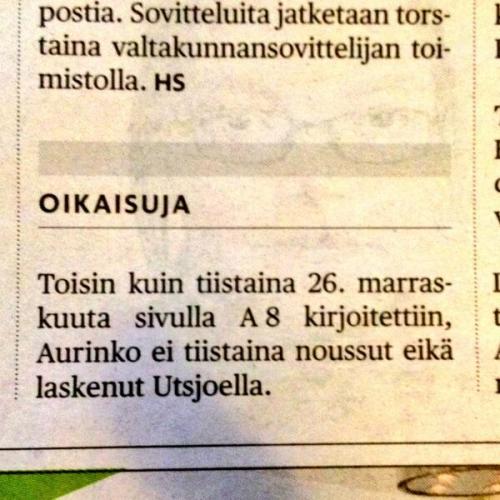
 .
järki ei riitä selittämään tapahtumia, avuksi tulee tunne. Tähän liittyy myös venäläinen sielu, joka kylpee kärsimyksessä
.
Pidemmistä hetkistä kaksi on ylitse muiden. Hurmaavassa Linnankosken lukiossa arvostettu rouva emeritalehtori oli perustanut viimeisenä työvuotenaan kurssin nimeltä Kasvien salattu maailma. Kurssi kummitteli haamuna vuosia papereissa tunnuksella Bi7, kunnes päätin ilman sen kummempaa osaamista herättää kurssin henkiin. Valoisaan biologian luokkaan ilmestyi huhtikuun alussa 31 lukion hymyilevintä tyttöä ja yksi poika (josta pidettiin kurssilla hyvää huolta). Opettelimme tunnistamaan kasveja, teimme joitakin kokeita, seikkailimme kasvitieteellisellä puutarhalla ja hymyilimme. Koko kevät kirmattiin voikukkaseppele kutreilla. Tuskin kukaan meistä oppi elämässä hyödyllisiä tietoja ja taitoja. Tuon kurssin jälkeen en ole sellaisia edes kaivannut.sipuran mika, tässä aines
Why Steven Pinker, Like Jared Diamond, Is Wrong
Tuesday, 11 June 2013 09:25 By Stephen Corry, Truthout | Op-Ed
179
font size
Print
Email
Steven Pinkner, taking part in the TESL conference at Thompson Rivers University, Oct. 12, 2012. (Photo: Thompson Rivers University)I recently attacked Jared Diamond's view that most tribal peoples live in a state of constant warfare. This old colonial idea was first popularly resurrected by Steven Pinker, not Diamond, so it's time to peruse the former's book, The Better Angels of Our Nature.
I battled my way through Better Angels. By the end, I was worn down by the faulty facts and attempts to lead the reader astray. Almost wherever one probes Pinker's facts, they crumble.
Let's start at the beginning for a perfect example of how Pinker leads us on. He takes only a single page of preamble before he tries to sell us his grisly thesis, which as far as I can understand it, is that everyone was once generally violent and horrible (tribal people still are, because apparently they are living relics of the past). Darwinian selection favored the most aggressive towards outsiders, and nicest to insiders. They had lots of children who went on to create states, which were generally nice, and imposed peace and "prosperity."(1)
Better Angels opens with a rhetorical question, "What is it about the ancients that they couldn't leave us an interesting corpse without resorting to foul play?"
Exhibit number one is the 5,200 year-old "Iceman," nicknamed "Ötzi." As Pinker breathes with Hitchcockian crescendo, "[Ötzi] had not fallen in a crevasse and frozen to death, as scientists had originally surmised; he had been murdered." Here is Pinker's very first "Murder Most Foul."
Introducing Ötzi with a list of his kit, "ax and backpack, a quiver of fletched arrows, a wood-handled dagger… ," Pinker's deduction seems straightforward. But, although scientists have come up with dozens of guesses about how Ötzi met his end, Pinker offers us just one "reconstruction:" He thinks Ötzi "belonged to a raiding party that clashed with a neighboring tribe."(2)
I will avoid bending the facts to fit a hypothesis, and cross-examine the evidence. The Iceman had three significant wounds: a cut hand; an arrowhead in his back, and a blow to his head. It was a violent death, but did it result from a clash between tribes?
Donning our Sherlock Holmes deerstalker hat, let's scrutinize Pinker's list of Ötzi's possessions, for it is largely from these that the accusation is construed. It suggests that if Ötzi really was looking for a fight, he was more Marx Brother than Navy SEAL. The flint blade of his dagger was tiny, about one-third the length of a table knife. It would have been great for skinning game, but feeble as a weapon. His bow was half-made, not even notched to take a string; twelve of the fourteen arrows, too, were neither fletched nor had arrowheads. Pinker is fond of statistics, so here's one: 100% of Ötzi's weapons were duds.
The raiding party reconstruction collapses, so let's posit an alternative fantasy. Suppose Ötzi is resting after his ascent when he's shot by an inexperienced hunter looking for game. He flails in agony, inadvertently smashing his head on a rock but succeeding in pulling out the arrowshaft. It may all have been a hunting accident - not foul play at all.(3) If detectives were called to a contemporary scene, would they ejaculate "Murder!" with such alacrity? Surely not, if they were Poirot rather than Clouseau. Wouldn't Pinker be the first to reach for the statistics?
He might, for example, compare the number of Italian hunters murdered (about one every couple of months) to those killed accidentally while hunting. In October 2012, the month after the season started, thirteen hunters had died in shooting accidents. In other words, it is 26 times more likely for a hunter to die in a hunting accident than to be murdered, at least at the start of the season.
Bearing in mind that Ötzi was not equipped for a raid, that today's hunters have had millennia to improve their safety record, that modern hunters don't disguise themselves in animal furs, like those Ötzi was wearing, is it not more likely that this was a case of accidental death?(3)
I stress that I am not putting it forward as a theory: My point is simply that the chances of Ötzi being in a raiding party are close to zero. Though my facts are true, my proposition is facetious. I have no idea how Ötzi died - but nor does Pinker.
As I've demonstrated, there is plenty in Pinker's first few pages that is plain wrong. He selects, bends and omits facts; he claims his methods are scientific, but they aren't. Pinker's data is not irrefutable, and I am far from the first to question his conclusions.(4)
Pinker picks his victims with hindsight, but we can now pass a ruling on his supposed rhetorical submission, "What is it about the ancients that they couldn't leave us an interesting corpse without resorting to foul play?" The verdict is simple: They could and did.
There are many other examples of tendentiousness in Pinker's endless depiction of the violent past. His facts shake and buckle under cross-examination. Look at how he approaches the An Lushan revolt in eighth century China, labeling it, "the worst atrocity of all time… that, according to censuses, resulted in the loss of… a sixth of the world's population." He cites Matthew White, but White himself puts the figure at "just" 13 million. This doesn't stop Pinker from gleefully and unequivocally declaring it the world's worst atrocity (which it isn't, according to White's latest guess).
Consider, also, his glib assertion, "There is no indication that anyone but Hitler and a few fanatical henchmen thought it was a good idea for the Jews to be exterminated." Recent research has found 42,500 institutions set up to perpetrate the Holocaust. According to Geoffrey Megargee, "Many more people knew about it and took part in it … it was central to the entire Nazi system … many other countries had their own camp systems."(5) Pinker's description is hardly uncontentious.
When Pinker's opinion unabashedly shines through, it's easy to see where he's coming from. In his third chapter, pure prejudice runs amok.
The section begins with a look at the statistics of "declining" homicide rates in Europe (which his graphs show as recently increasing) and then degenerates into a "Tales from the Crypt" or "Horrible Histories" version of "medieval," whom Pinker condemns as "childish," "gross," "boorish," "animalistic" and "immature," lacking all "refinement, self-control, and consideration."
As proof of Middle Age depravity, Pinker cites a c. 1480 manuscript, which he calls "a depiction of daily life." He reproduces drawings of people behaving grossly, entitled Saturn and Mars, but omits to tell us that they are intended to show the effects engendered by those planets, not "daily life" at all. Plenty of other drawings in the book show people going about their lives perfectly politely (busily undermining his theory).
This, of course, is the time of the extraordinarily original European cathedrals, of Thomas Aquinas, whose work has been called the philosophical foundation from which science originates.(6) It was an age when Renaissance ideas started to be forged, when Francis of Assisi and Hildegard of Bingen promulgated revolutionary notions about humanity.
Pinker believes that industrialized people today are better than anyone else, and makes the astonishing claim, "It was not just mundane physical comforts that our recent ancestors did without. It was also the higher and nobler things in life, such as knowledge, beauty, and human connection." This will be surprising news to most tourists in Florence or Athens.
But it is still a digression from my main point: What's the evidence concerning the violence of both our ancestors and tribal peoples today? To substantiate his claim, Pinker primarily relies on a graph comparing the percentage of "deaths in warfare" in a miniscule selection of four human "categories." The ordering of the data follows no pattern; the categorizations are also spurious. The idea that this is a scientific representation of anything is nonsense.
The percentages of war deaths for modern states are, in Pinker's view, practically invisible. As I have looked at the smoke and mirrors used to reduce what are in fact huge numbers to Pinker's tiny ones in my criticism of Jared Diamond's book,(7) I won't go into that again. A very detailed rebuttal of this aspect of his data, especially that relating to American foreign policy, can be found in Edward S Herman and David Peterson's, "Reality Denial: Steven Pinker's Apologetics for Western-Imperial Violence."(8)
Leaving aside (for reasons of space!) those he categorizes as "hunter-gathers," the thousands of remaining tribal peoples in the world are represented by just ten; half of those are from New Guinea.(9) That's just half of one percent of all the island's "tribes." These are not selected randomly, but are those few societies where researchers have collected information on causes of death. One of them is the Dani of West Papua, an area invaded and brutally suppressed by Indonesia since the 1960s. As spokesman Markus Haluk, retorted (over Jared Diamond's book), "The total of Dani victims from the Indonesian atrocities … is far greater than those from tribal war."(10) Why aren't those deaths in Pinker's graph?
It is simply not scientific to generalize about a thousand New Guinea tribes on information from just five.
As always nowadays, whenever the "Brutal Savage" myth is invoked, Napoleon Chagnon's "sweaty, hideous"(11) Yanomami is guaranteed to career (I use the word advisedly) cinematically into sight, screaming blood-curdling growls and wails, and oozing green snot and red blood.(12) Although familiar to American college students, virtually every other scholar who has lived with the tribe considers Chagnon's characterization to be fictional.(13)
Four of the five cited non-New Guinea societies are from the Amazon, and two of those are Yanomami.(13) Looked at another way, no less than twenty percent of the data Pinker uses to categorize the violence of the entire planet's tribal peoples (excluding "hunter-gatherers") is derived from a single anthropologist, Napoleon Chagnon - whose data has been criticized for decades.(14) To put this yet another way, nearly half of all the thousands of the world's tribal peoples outside New Guinea (again excluding those Pinker has decided are "hunter-gatherers") are condemned as "Brutal Savages" on the strength of one man's account of one tribe.
The only Amazonians on the graph who are not Yanomami are the Waorani (from Ecuador) and "Jivaro" (a pejorative name for peoples straddling the Peru-Ecuador border). It's perfectly true that both had a bellicose reputation, unlike many of their neighboring tribes who simply didn't.(15) This is a very revealing point, of course: These authors cherry-pick special cases.
Before considering them, it's worth noting that Jared Diamond, who also promulgates the "Brutal Savage" myth, responded to my criticism of his book by claiming that he had the scientific data, and that I, and Survival International, romantically portray tribal peoples as universally peaceful.
Neither observation is true: The data presented by these authors is at least contentious, where it's not plain wrong, and Survival makes no secret of the fact that tribal people, like everyone, fight and kill to varying degrees. Why hide it? We have personal experience.
By way of example, when I was staying in a settlement of Aguaruna ("Jivaroans") in the 1970s, there were deadly raids on a community a couple of miles away. Through missionary and petroleum company activity, most Aguaruna had been drawn into settlements along the riverbanks, and former enmities were exacerbated by their new enforced proximity. I don't know if the high rate of deaths cited (these were raids, not "war" as such) is representative of what these peoples did before the state came along in one or other of its invasive guises, but once again - nor does Pinker.
By far the overall leader in Pinker's category of warlike folk turns out to be the Waorani of Ecuador, with over sixty percent being killed. The Waorani were undoubtedly viewed as "brutal savages" by both their Indian and non-Indian neighbors.
They live near the Napo River, a thoroughfare for centuries. Waorani raided other Indian settlements for generations, both to steal things and as a warning to stay away. Their name for all non-Waorani is cowode, meaning "cannibal." "We" might think they're pretty brutal, but it's reciprocated: They think exactly the same of "us."
Pretending that any propensity to violence exists in isolation to their centuries-old struggle against invasion just won't wash.
I have no theory about whether life with the Waorani, or any tribe, is really more threatening than in a Bogotá slum. I do know that it has never felt like that to me. Even Jared Diamond has suggested, though quietly, that the people he felt most endangered by in New Guinea were the Indonesian military, not the tribespeople.(16)
Pinker doesn't sit in judgment over just the Waorani, of course, but over all humankind. He concludes we are brutal savages until tamed by a nation state bringing peaceful civilization. As far as contemporary tribal peoples are concerned, it couldn't be further from the truth: the arrival of the state unleashes a savagery second to none in its brutality. Pinker also believes that civilization today is a function of upper class leadership and refinement trickling down to the lower orders. Many share this dogma, or a variation. For Communists, it is the Party that bestows munificence and foresight; otherwise the plot is pretty much the same. The elite - capitalist or communist - has a fierce vested interest in all of us swallowing similar hokum, even better if it's supposedly confirmed by "science" and "data."
The most curious aspect of Pinker's book is his title. I'm not convinced that, at heart, he really does think that human nature includes any "angel" at all. In his view, we are little more than animals shaped by pure biology, until the lucky (murderous) few invent the state and commerce, and are rescued by the resulting "culture." What others might call beauty, truth, goodness, or justice - those things that make the human mind different from other animals - have, in his view, only very recently come to the fore, and are still undeveloped for all who are not like "us."
He goes further; he thinks that until about 60 years ago (around the time he was born!) human beings were both "morally retarded" and less intelligent than they are now. By that, he doesn't mean everyone; for Pinker, only those who live in "liberal democracies," such as the United States or western Europe, have moved beyond their "retarded" state!
He claims scientific support for what is mere opinion by falsely charging contemporary tribal peoples, the "stateless," and all our ancestors, with more or less unremitting villainy. It's delusional nonsense - a breathtakingly arrogant, self-serving, and tired idea which diminishes human beings to something less than we really are - and were. Were such an idea to gain credence, it risks facilitating further cruelty: for example, it would falsely assert the benefits of state intervention in tribal peoples' lives, condemning some to certain death.
However, they are far from being the only ones who should watch out when Pinker's on the prowl.
If you're not one of his peers, then beware the hanging judge, whose supporters petition ad nauseam that his opinions must be taken as universal, scientific, infallible. He's certainly dangerous, but it's high time for a retrial, and perhaps there's hope for a reprieve … for all of us.
.
järki ei riitä selittämään tapahtumia, avuksi tulee tunne. Tähän liittyy myös venäläinen sielu, joka kylpee kärsimyksessä
.
Pidemmistä hetkistä kaksi on ylitse muiden. Hurmaavassa Linnankosken lukiossa arvostettu rouva emeritalehtori oli perustanut viimeisenä työvuotenaan kurssin nimeltä Kasvien salattu maailma. Kurssi kummitteli haamuna vuosia papereissa tunnuksella Bi7, kunnes päätin ilman sen kummempaa osaamista herättää kurssin henkiin. Valoisaan biologian luokkaan ilmestyi huhtikuun alussa 31 lukion hymyilevintä tyttöä ja yksi poika (josta pidettiin kurssilla hyvää huolta). Opettelimme tunnistamaan kasveja, teimme joitakin kokeita, seikkailimme kasvitieteellisellä puutarhalla ja hymyilimme. Koko kevät kirmattiin voikukkaseppele kutreilla. Tuskin kukaan meistä oppi elämässä hyödyllisiä tietoja ja taitoja. Tuon kurssin jälkeen en ole sellaisia edes kaivannut.sipuran mika, tässä aines
Why Steven Pinker, Like Jared Diamond, Is Wrong
Tuesday, 11 June 2013 09:25 By Stephen Corry, Truthout | Op-Ed
179
font size
Print
Email
Steven Pinkner, taking part in the TESL conference at Thompson Rivers University, Oct. 12, 2012. (Photo: Thompson Rivers University)I recently attacked Jared Diamond's view that most tribal peoples live in a state of constant warfare. This old colonial idea was first popularly resurrected by Steven Pinker, not Diamond, so it's time to peruse the former's book, The Better Angels of Our Nature.
I battled my way through Better Angels. By the end, I was worn down by the faulty facts and attempts to lead the reader astray. Almost wherever one probes Pinker's facts, they crumble.
Let's start at the beginning for a perfect example of how Pinker leads us on. He takes only a single page of preamble before he tries to sell us his grisly thesis, which as far as I can understand it, is that everyone was once generally violent and horrible (tribal people still are, because apparently they are living relics of the past). Darwinian selection favored the most aggressive towards outsiders, and nicest to insiders. They had lots of children who went on to create states, which were generally nice, and imposed peace and "prosperity."(1)
Better Angels opens with a rhetorical question, "What is it about the ancients that they couldn't leave us an interesting corpse without resorting to foul play?"
Exhibit number one is the 5,200 year-old "Iceman," nicknamed "Ötzi." As Pinker breathes with Hitchcockian crescendo, "[Ötzi] had not fallen in a crevasse and frozen to death, as scientists had originally surmised; he had been murdered." Here is Pinker's very first "Murder Most Foul."
Introducing Ötzi with a list of his kit, "ax and backpack, a quiver of fletched arrows, a wood-handled dagger… ," Pinker's deduction seems straightforward. But, although scientists have come up with dozens of guesses about how Ötzi met his end, Pinker offers us just one "reconstruction:" He thinks Ötzi "belonged to a raiding party that clashed with a neighboring tribe."(2)
I will avoid bending the facts to fit a hypothesis, and cross-examine the evidence. The Iceman had three significant wounds: a cut hand; an arrowhead in his back, and a blow to his head. It was a violent death, but did it result from a clash between tribes?
Donning our Sherlock Holmes deerstalker hat, let's scrutinize Pinker's list of Ötzi's possessions, for it is largely from these that the accusation is construed. It suggests that if Ötzi really was looking for a fight, he was more Marx Brother than Navy SEAL. The flint blade of his dagger was tiny, about one-third the length of a table knife. It would have been great for skinning game, but feeble as a weapon. His bow was half-made, not even notched to take a string; twelve of the fourteen arrows, too, were neither fletched nor had arrowheads. Pinker is fond of statistics, so here's one: 100% of Ötzi's weapons were duds.
The raiding party reconstruction collapses, so let's posit an alternative fantasy. Suppose Ötzi is resting after his ascent when he's shot by an inexperienced hunter looking for game. He flails in agony, inadvertently smashing his head on a rock but succeeding in pulling out the arrowshaft. It may all have been a hunting accident - not foul play at all.(3) If detectives were called to a contemporary scene, would they ejaculate "Murder!" with such alacrity? Surely not, if they were Poirot rather than Clouseau. Wouldn't Pinker be the first to reach for the statistics?
He might, for example, compare the number of Italian hunters murdered (about one every couple of months) to those killed accidentally while hunting. In October 2012, the month after the season started, thirteen hunters had died in shooting accidents. In other words, it is 26 times more likely for a hunter to die in a hunting accident than to be murdered, at least at the start of the season.
Bearing in mind that Ötzi was not equipped for a raid, that today's hunters have had millennia to improve their safety record, that modern hunters don't disguise themselves in animal furs, like those Ötzi was wearing, is it not more likely that this was a case of accidental death?(3)
I stress that I am not putting it forward as a theory: My point is simply that the chances of Ötzi being in a raiding party are close to zero. Though my facts are true, my proposition is facetious. I have no idea how Ötzi died - but nor does Pinker.
As I've demonstrated, there is plenty in Pinker's first few pages that is plain wrong. He selects, bends and omits facts; he claims his methods are scientific, but they aren't. Pinker's data is not irrefutable, and I am far from the first to question his conclusions.(4)
Pinker picks his victims with hindsight, but we can now pass a ruling on his supposed rhetorical submission, "What is it about the ancients that they couldn't leave us an interesting corpse without resorting to foul play?" The verdict is simple: They could and did.
There are many other examples of tendentiousness in Pinker's endless depiction of the violent past. His facts shake and buckle under cross-examination. Look at how he approaches the An Lushan revolt in eighth century China, labeling it, "the worst atrocity of all time… that, according to censuses, resulted in the loss of… a sixth of the world's population." He cites Matthew White, but White himself puts the figure at "just" 13 million. This doesn't stop Pinker from gleefully and unequivocally declaring it the world's worst atrocity (which it isn't, according to White's latest guess).
Consider, also, his glib assertion, "There is no indication that anyone but Hitler and a few fanatical henchmen thought it was a good idea for the Jews to be exterminated." Recent research has found 42,500 institutions set up to perpetrate the Holocaust. According to Geoffrey Megargee, "Many more people knew about it and took part in it … it was central to the entire Nazi system … many other countries had their own camp systems."(5) Pinker's description is hardly uncontentious.
When Pinker's opinion unabashedly shines through, it's easy to see where he's coming from. In his third chapter, pure prejudice runs amok.
The section begins with a look at the statistics of "declining" homicide rates in Europe (which his graphs show as recently increasing) and then degenerates into a "Tales from the Crypt" or "Horrible Histories" version of "medieval," whom Pinker condemns as "childish," "gross," "boorish," "animalistic" and "immature," lacking all "refinement, self-control, and consideration."
As proof of Middle Age depravity, Pinker cites a c. 1480 manuscript, which he calls "a depiction of daily life." He reproduces drawings of people behaving grossly, entitled Saturn and Mars, but omits to tell us that they are intended to show the effects engendered by those planets, not "daily life" at all. Plenty of other drawings in the book show people going about their lives perfectly politely (busily undermining his theory).
This, of course, is the time of the extraordinarily original European cathedrals, of Thomas Aquinas, whose work has been called the philosophical foundation from which science originates.(6) It was an age when Renaissance ideas started to be forged, when Francis of Assisi and Hildegard of Bingen promulgated revolutionary notions about humanity.
Pinker believes that industrialized people today are better than anyone else, and makes the astonishing claim, "It was not just mundane physical comforts that our recent ancestors did without. It was also the higher and nobler things in life, such as knowledge, beauty, and human connection." This will be surprising news to most tourists in Florence or Athens.
But it is still a digression from my main point: What's the evidence concerning the violence of both our ancestors and tribal peoples today? To substantiate his claim, Pinker primarily relies on a graph comparing the percentage of "deaths in warfare" in a miniscule selection of four human "categories." The ordering of the data follows no pattern; the categorizations are also spurious. The idea that this is a scientific representation of anything is nonsense.
The percentages of war deaths for modern states are, in Pinker's view, practically invisible. As I have looked at the smoke and mirrors used to reduce what are in fact huge numbers to Pinker's tiny ones in my criticism of Jared Diamond's book,(7) I won't go into that again. A very detailed rebuttal of this aspect of his data, especially that relating to American foreign policy, can be found in Edward S Herman and David Peterson's, "Reality Denial: Steven Pinker's Apologetics for Western-Imperial Violence."(8)
Leaving aside (for reasons of space!) those he categorizes as "hunter-gathers," the thousands of remaining tribal peoples in the world are represented by just ten; half of those are from New Guinea.(9) That's just half of one percent of all the island's "tribes." These are not selected randomly, but are those few societies where researchers have collected information on causes of death. One of them is the Dani of West Papua, an area invaded and brutally suppressed by Indonesia since the 1960s. As spokesman Markus Haluk, retorted (over Jared Diamond's book), "The total of Dani victims from the Indonesian atrocities … is far greater than those from tribal war."(10) Why aren't those deaths in Pinker's graph?
It is simply not scientific to generalize about a thousand New Guinea tribes on information from just five.
As always nowadays, whenever the "Brutal Savage" myth is invoked, Napoleon Chagnon's "sweaty, hideous"(11) Yanomami is guaranteed to career (I use the word advisedly) cinematically into sight, screaming blood-curdling growls and wails, and oozing green snot and red blood.(12) Although familiar to American college students, virtually every other scholar who has lived with the tribe considers Chagnon's characterization to be fictional.(13)
Four of the five cited non-New Guinea societies are from the Amazon, and two of those are Yanomami.(13) Looked at another way, no less than twenty percent of the data Pinker uses to categorize the violence of the entire planet's tribal peoples (excluding "hunter-gatherers") is derived from a single anthropologist, Napoleon Chagnon - whose data has been criticized for decades.(14) To put this yet another way, nearly half of all the thousands of the world's tribal peoples outside New Guinea (again excluding those Pinker has decided are "hunter-gatherers") are condemned as "Brutal Savages" on the strength of one man's account of one tribe.
The only Amazonians on the graph who are not Yanomami are the Waorani (from Ecuador) and "Jivaro" (a pejorative name for peoples straddling the Peru-Ecuador border). It's perfectly true that both had a bellicose reputation, unlike many of their neighboring tribes who simply didn't.(15) This is a very revealing point, of course: These authors cherry-pick special cases.
Before considering them, it's worth noting that Jared Diamond, who also promulgates the "Brutal Savage" myth, responded to my criticism of his book by claiming that he had the scientific data, and that I, and Survival International, romantically portray tribal peoples as universally peaceful.
Neither observation is true: The data presented by these authors is at least contentious, where it's not plain wrong, and Survival makes no secret of the fact that tribal people, like everyone, fight and kill to varying degrees. Why hide it? We have personal experience.
By way of example, when I was staying in a settlement of Aguaruna ("Jivaroans") in the 1970s, there were deadly raids on a community a couple of miles away. Through missionary and petroleum company activity, most Aguaruna had been drawn into settlements along the riverbanks, and former enmities were exacerbated by their new enforced proximity. I don't know if the high rate of deaths cited (these were raids, not "war" as such) is representative of what these peoples did before the state came along in one or other of its invasive guises, but once again - nor does Pinker.
By far the overall leader in Pinker's category of warlike folk turns out to be the Waorani of Ecuador, with over sixty percent being killed. The Waorani were undoubtedly viewed as "brutal savages" by both their Indian and non-Indian neighbors.
They live near the Napo River, a thoroughfare for centuries. Waorani raided other Indian settlements for generations, both to steal things and as a warning to stay away. Their name for all non-Waorani is cowode, meaning "cannibal." "We" might think they're pretty brutal, but it's reciprocated: They think exactly the same of "us."
Pretending that any propensity to violence exists in isolation to their centuries-old struggle against invasion just won't wash.
I have no theory about whether life with the Waorani, or any tribe, is really more threatening than in a Bogotá slum. I do know that it has never felt like that to me. Even Jared Diamond has suggested, though quietly, that the people he felt most endangered by in New Guinea were the Indonesian military, not the tribespeople.(16)
Pinker doesn't sit in judgment over just the Waorani, of course, but over all humankind. He concludes we are brutal savages until tamed by a nation state bringing peaceful civilization. As far as contemporary tribal peoples are concerned, it couldn't be further from the truth: the arrival of the state unleashes a savagery second to none in its brutality. Pinker also believes that civilization today is a function of upper class leadership and refinement trickling down to the lower orders. Many share this dogma, or a variation. For Communists, it is the Party that bestows munificence and foresight; otherwise the plot is pretty much the same. The elite - capitalist or communist - has a fierce vested interest in all of us swallowing similar hokum, even better if it's supposedly confirmed by "science" and "data."
The most curious aspect of Pinker's book is his title. I'm not convinced that, at heart, he really does think that human nature includes any "angel" at all. In his view, we are little more than animals shaped by pure biology, until the lucky (murderous) few invent the state and commerce, and are rescued by the resulting "culture." What others might call beauty, truth, goodness, or justice - those things that make the human mind different from other animals - have, in his view, only very recently come to the fore, and are still undeveloped for all who are not like "us."
He goes further; he thinks that until about 60 years ago (around the time he was born!) human beings were both "morally retarded" and less intelligent than they are now. By that, he doesn't mean everyone; for Pinker, only those who live in "liberal democracies," such as the United States or western Europe, have moved beyond their "retarded" state!
He claims scientific support for what is mere opinion by falsely charging contemporary tribal peoples, the "stateless," and all our ancestors, with more or less unremitting villainy. It's delusional nonsense - a breathtakingly arrogant, self-serving, and tired idea which diminishes human beings to something less than we really are - and were. Were such an idea to gain credence, it risks facilitating further cruelty: for example, it would falsely assert the benefits of state intervention in tribal peoples' lives, condemning some to certain death.
However, they are far from being the only ones who should watch out when Pinker's on the prowl.
If you're not one of his peers, then beware the hanging judge, whose supporters petition ad nauseam that his opinions must be taken as universal, scientific, infallible. He's certainly dangerous, but it's high time for a retrial, and perhaps there's hope for a reprieve … for all of us.
 Tampereen ja Porin, Loimaan ja Turun ja Karjaan ja Salon väliset rataosuudet ovat poissa käytöstä radalle kaatuneiden puiden vuoksi.ja mie oo menossa tenttii don mae fetish ov YourselvYhdysvaltojen Valkoisen talon edustaja vaati keskiviikkona Janukovytšia kuuntelemaan kansaa ja aloittamaan uudelleen Ukrainan yhdentymisen Euroopan kanssa.
The director of the Moscow-based institute, a hardened Russian spy Lieutenant-General Leonid Reshetnikov told Mr. Niemelainen that his agency, in addition to Russian gang embassy and Russian "cultural center", would monitor the situation with the NATO in Northern Europe. According to him, the Finnish affiliate of his institute is the springboard to Northern Europe.
"Despite some problems we have the best relations with Finland among other North European countries", explained the Russian spy why he chose Finland for North-European headquarters of his spy agency and added:
"We have very limited objective information on Finland. And not only on Finland. In general, we have enough information only on the US, and perhaps also on Germany and China. I hope that the situation will improve a bit through our center".
The report by Helsingin Sanomat, and earlier insider information caused enthusiasm among "Finnish anti-fascists", earlier called Finnish communists, since the new Russian spy Center promises them well-paid jobs with new opportunities.
As can be understood from an article on his Finnish blog, a year-long "friend of Russia", am unfrocked "anti-fascist" priest Juha Molari, who tracks the Kavkaz Center and Caucasian refugees in Helsinki, he and another better known "anti-fascist", Johan Backman, now offer their professional skills to the new Russian spy center.
Department of Monitoring
Kavkaz Center
Tampereen ja Porin, Loimaan ja Turun ja Karjaan ja Salon väliset rataosuudet ovat poissa käytöstä radalle kaatuneiden puiden vuoksi.ja mie oo menossa tenttii don mae fetish ov YourselvYhdysvaltojen Valkoisen talon edustaja vaati keskiviikkona Janukovytšia kuuntelemaan kansaa ja aloittamaan uudelleen Ukrainan yhdentymisen Euroopan kanssa.
The director of the Moscow-based institute, a hardened Russian spy Lieutenant-General Leonid Reshetnikov told Mr. Niemelainen that his agency, in addition to Russian gang embassy and Russian "cultural center", would monitor the situation with the NATO in Northern Europe. According to him, the Finnish affiliate of his institute is the springboard to Northern Europe.
"Despite some problems we have the best relations with Finland among other North European countries", explained the Russian spy why he chose Finland for North-European headquarters of his spy agency and added:
"We have very limited objective information on Finland. And not only on Finland. In general, we have enough information only on the US, and perhaps also on Germany and China. I hope that the situation will improve a bit through our center".
The report by Helsingin Sanomat, and earlier insider information caused enthusiasm among "Finnish anti-fascists", earlier called Finnish communists, since the new Russian spy Center promises them well-paid jobs with new opportunities.
As can be understood from an article on his Finnish blog, a year-long "friend of Russia", am unfrocked "anti-fascist" priest Juha Molari, who tracks the Kavkaz Center and Caucasian refugees in Helsinki, he and another better known "anti-fascist", Johan Backman, now offer their professional skills to the new Russian spy center.
Department of Monitoring
Kavkaz Center
 amerikka ja saudit ostaa suomen sähköverkoVoisiko lähiöostarien räkälöitymisen kääntää voitoksi? Tätä mietin, kun HS uutisoi, että vain kaljakuppilat pärjäävät Helsingin lähiöiden vanhoissa ostoskeskuksissa.
Kaljakuppilathan ovat lähipalveluiden luontainen voittajakonsepti, jota nettikauppa tai automarketit eivät pysty tappamaan. Kun ongelma on lähipalveluiden häviäminen, kannattaako ruikuttaa siitä ainoasta pärjäävästä lähipalvelusta?
Tekisi toki mieli ruikuttaa. Meitä kunnon keskiluokkaisia lähiökansalaisia kulmakuppiloiden meno ei yleensä miellytä. Niistä poistuvat humalaiset aiheuttavat häiriöitä ja ovat ylipäätään vääriä ihmisiä. Kuppilat ovat nuhjuisia eikä niistä saa edes kunnon espressoa.
Eikä lapsia voi viedä paikkaan, jossa juodaan kaljaa.
Sen sijaan me harrastamme lähiöasukastoimintaa asukastiloissa.
Verorahoilla kustannetussa asukastilassa on hyvä juoda omakustannehintaista kahvia muiden koti-isien ja äitien kanssa. Samalla voi olla huolissaan lähipalveluista.
Asukastilan tarkoitus on tarjota mahdollisuuksia tavata lähialueen ihmisiä, tutustua ja harrastaa. Kuppilaa noin yleisesti ottaen käytetään samaan tarkoitukseen – tosin ainoat tarjolla olevat harrastukset ovat biljardi, tikanheitto ja visailut.
Englanniksi kuppilaa sanotaan pubiksi, public houseksi. Sen voisi kääntää vapaamuotoisesti vaikka asukastilaksi.
Kaljan myynti näyttää olevan jotakuinkin ainoa bisnes, joka yhä kannattaa lähiön kivijalassa. Siksi parempaa lähiötä tuskin saa aikaan taistelemalla kuppiloita vastaan. Jos kuppilatkin lähtevät, jäljelle ei jää enää mitään.
Mielekkäämpää olisi taistella muutoksen puolesta. Jos kaljakuppiloista ei voi päästä eroon, miten niistä voisi saada parempia?
Entä jos neulepiirin kokoontumiset veisi lähiökuppilaan? Voisiko yrittäjä siistiä paikat niin, että päivällä baarissa voisi kontata vauvalauma, vaikka iltaisin pöydissä istuisi setiä parantamassa maailmaa liian monen tuopin äärellä? Voisiko asukasyhdistys kokoustaa kerhotilan sijaan kuppilassa?
Suomalaisilla tuntuu olevan nykyään tapana rajata tilat tiukasti asiallisiin ja asiattomiin – asiattomissa ollaan kännissä, asiallisissa hoidetaan asioita ja ollaan siivosti. Samassa tilassa ei voi tehdä molempia. Kunnollinen perheenisä voi vetää tuhdin hiprakan viikon päätteeksi, mutta työlounaalla on sopimatonta nauttia yhtä olutta.
Putipuhtaasti asiallisten paikkojen pitämisestä ei taida lähiöissä olla bisnekseksi. Olisiko todellinen lähiön menestyskonsepti kuitenkin paikka, jossa voisi sekä hoitaa asialliset hommat että olla kuin ellun kanat?
Kuinka paljon lähiöbaarin pitäisi siistiytyä, että se voisi olla kunniallisen asukasyhdistyksen tukikohta? Ja kuinka paljon asukasyhdistyksen pitäisi löysätä pipoa, että se pystyisi asettumaan alueen asukkaiden suosimaan baariin?
Voiko kuppiloiden menestyksen kääntää lähiöiden voitoksi?
amerikka ja saudit ostaa suomen sähköverkoVoisiko lähiöostarien räkälöitymisen kääntää voitoksi? Tätä mietin, kun HS uutisoi, että vain kaljakuppilat pärjäävät Helsingin lähiöiden vanhoissa ostoskeskuksissa.
Kaljakuppilathan ovat lähipalveluiden luontainen voittajakonsepti, jota nettikauppa tai automarketit eivät pysty tappamaan. Kun ongelma on lähipalveluiden häviäminen, kannattaako ruikuttaa siitä ainoasta pärjäävästä lähipalvelusta?
Tekisi toki mieli ruikuttaa. Meitä kunnon keskiluokkaisia lähiökansalaisia kulmakuppiloiden meno ei yleensä miellytä. Niistä poistuvat humalaiset aiheuttavat häiriöitä ja ovat ylipäätään vääriä ihmisiä. Kuppilat ovat nuhjuisia eikä niistä saa edes kunnon espressoa.
Eikä lapsia voi viedä paikkaan, jossa juodaan kaljaa.
Sen sijaan me harrastamme lähiöasukastoimintaa asukastiloissa.
Verorahoilla kustannetussa asukastilassa on hyvä juoda omakustannehintaista kahvia muiden koti-isien ja äitien kanssa. Samalla voi olla huolissaan lähipalveluista.
Asukastilan tarkoitus on tarjota mahdollisuuksia tavata lähialueen ihmisiä, tutustua ja harrastaa. Kuppilaa noin yleisesti ottaen käytetään samaan tarkoitukseen – tosin ainoat tarjolla olevat harrastukset ovat biljardi, tikanheitto ja visailut.
Englanniksi kuppilaa sanotaan pubiksi, public houseksi. Sen voisi kääntää vapaamuotoisesti vaikka asukastilaksi.
Kaljan myynti näyttää olevan jotakuinkin ainoa bisnes, joka yhä kannattaa lähiön kivijalassa. Siksi parempaa lähiötä tuskin saa aikaan taistelemalla kuppiloita vastaan. Jos kuppilatkin lähtevät, jäljelle ei jää enää mitään.
Mielekkäämpää olisi taistella muutoksen puolesta. Jos kaljakuppiloista ei voi päästä eroon, miten niistä voisi saada parempia?
Entä jos neulepiirin kokoontumiset veisi lähiökuppilaan? Voisiko yrittäjä siistiä paikat niin, että päivällä baarissa voisi kontata vauvalauma, vaikka iltaisin pöydissä istuisi setiä parantamassa maailmaa liian monen tuopin äärellä? Voisiko asukasyhdistys kokoustaa kerhotilan sijaan kuppilassa?
Suomalaisilla tuntuu olevan nykyään tapana rajata tilat tiukasti asiallisiin ja asiattomiin – asiattomissa ollaan kännissä, asiallisissa hoidetaan asioita ja ollaan siivosti. Samassa tilassa ei voi tehdä molempia. Kunnollinen perheenisä voi vetää tuhdin hiprakan viikon päätteeksi, mutta työlounaalla on sopimatonta nauttia yhtä olutta.
Putipuhtaasti asiallisten paikkojen pitämisestä ei taida lähiöissä olla bisnekseksi. Olisiko todellinen lähiön menestyskonsepti kuitenkin paikka, jossa voisi sekä hoitaa asialliset hommat että olla kuin ellun kanat?
Kuinka paljon lähiöbaarin pitäisi siistiytyä, että se voisi olla kunniallisen asukasyhdistyksen tukikohta? Ja kuinka paljon asukasyhdistyksen pitäisi löysätä pipoa, että se pystyisi asettumaan alueen asukkaiden suosimaan baariin?
Voiko kuppiloiden menestyksen kääntää lähiöiden voitoksi?
 toisin kuin tiistaina kerroinme, aurinko ei noussut eika laskenut Utsjoella http://www.avantgardenet.eu/contributorsreykjavik.pdf Helsinki, Finland 29.-31.8.2014
(Scroll down for the full calls for papers and chairs)https://www.google.com/search?q=linda+ruth+dickinson&rls=com.microsoft:fi-FI:IE-Address&source=lnms&tbm=isch&sa=X&ei=WgSWUomJB4nnywPZsYLYBQ&ved=0CAkQ_AUoAQ&biw=1440&bih=794
UTOPIA
toisin kuin tiistaina kerroinme, aurinko ei noussut eika laskenut Utsjoella http://www.avantgardenet.eu/contributorsreykjavik.pdf Helsinki, Finland 29.-31.8.2014
(Scroll down for the full calls for papers and chairs)https://www.google.com/search?q=linda+ruth+dickinson&rls=com.microsoft:fi-FI:IE-Address&source=lnms&tbm=isch&sa=X&ei=WgSWUomJB4nnywPZsYLYBQ&ved=0CAkQ_AUoAQ&biw=1440&bih=794
UTOPIA
 of Dionysus, sailing in a barrel and not recognising any authority' … Nadezhda Tolokonnikova of Pussy Riot writing to Slavoj Žižek. Photograph: David Levene/AFP/Getty/Guardian
.Her father, Andrei Tolokonnikov, told Buzzfeed: “No one knows anything. There’s no proof she’s alive, we don’t know the state of her health. Is she sick? Has she been beaten?” Her husband, Petya Verzilov, has been protesting outside the colony regularly. He said: “We think they moved her to a big city to hide her. It seems they got sick of these protests. They want to cut her off from the outside world. When they moved [political prisoner Mikhail] Khodorkovsky, he was also kind of absent for two weeks. Nobody knew where he was, then he suddenly appeared in Chita."
of Dionysus, sailing in a barrel and not recognising any authority' … Nadezhda Tolokonnikova of Pussy Riot writing to Slavoj Žižek. Photograph: David Levene/AFP/Getty/Guardian
.Her father, Andrei Tolokonnikov, told Buzzfeed: “No one knows anything. There’s no proof she’s alive, we don’t know the state of her health. Is she sick? Has she been beaten?” Her husband, Petya Verzilov, has been protesting outside the colony regularly. He said: “We think they moved her to a big city to hide her. It seems they got sick of these protests. They want to cut her off from the outside world. When they moved [political prisoner Mikhail] Khodorkovsky, he was also kind of absent for two weeks. Nobody knew where he was, then he suddenly appeared in Chita."
 ERO TEIVAINEN
ARTIKKELIT
12.5.2000, 13 VUOTTA SITTENMikäli demokratiaa halutaan pitää tavoittelemisen arvoisena päämääränä, talous ja kansallisvaltioita laajemmat yhteisöt olisi saatava maailmanyhteisön kansalaisten demokraattisesti valitsemien elinten valvontaan.
Teivo Teivaisella, 34, on repussaan rupisia riimejä ja karmeita tarinoita monilta maailmankolkilta. Huhtikuussa tohtoriksi väitellyt politiikan tutkija on viettänyt kulkurin elämää 16-vuotiaasta asti.
Vuonna 1985 Teivainen oli Intiassa, kun hän kuuli päässeensä Helsingin yliopistoon opiskelemaan valtio-oppia. Aasialainen kulttuuri kiehtoi ja Teivainen ajatteli ryhtyvänsä Intia-tutkijaksi.
Kolme vuotta myöhemmin hän oli suorittamassa valtio-opin työharjoittelujaksoaan social- och kommunal högskolanissa, kun ystävä pyysi mukaan ex tempore -lomalle Yhdysvaltoihin. Parin viikon matka muuttui yllättäen vierailevan tutkijan vakanssiksi New Yorkin valtionyliopistossa Binghamtonissa.
”Kun kesä oli lopuillaan, soittelin aina välillä Suomeen ja kyselin professori Ilkka Heiskaselta, että pitäisikö työharjoittelu katkaista, kun mä jään tänne. Se sanoi, että ei se mitään. Jos joku kyselee jotain, niin mä sanon, että sä olet kirjastossa käymässä.”
Puolen vuoden kuluttua Teivainen pakkasi taas kassinsa, suuntasi Yhdysvalloista etelään ja huomasi, että Latinalaisessa Amerikassa oli hyvä meininki.
”Yhdysvalloissa olemisella on aina ollut mulle poliittisesti radikalisoiva vaikutus. Radikalisoitumisen myötä Intia ja Buddha saivat jäädä Latinalaisen Amerikan ja Che Guevaran jalkoihin.”
Talouden politiikka
Viime vuosina Teivainen on palannut tasaisin väliajoin Etelä-Amerikkaan. Maanosasta on löytynyt myös vaimo, nykyisin Suomessa asuva perulainen runoilija-juristi Roxana Cris¾logo.
Työskenneltyään lukuvuoden 1990-91 Ylioppilaslehden toimittajana Teivainen on tienannut myös leipänsä tutkimalla Latinalaista Amerikkaa ja maailmanjärjestelmää Helsingin yliopiston iberoamerikkalaisessa keskuksessa.Teivaisen tuore valtio-opin väitöskirja käsittelee kansainvälistyneen talouden ja poikkikansallisten taloudellisten toimijoiden vaikutuksia Perun demokratiaan. Väitös on saanut kehuja muun muassa legendaariselta maailmanjärjestelmätutkijalta Immanuel Wallesteinilta.
Väitöskirja, kuten monet Teivaisen aiemmatkin tutkimukset, kyseenalaistaa niin kutsuttua taloudellisen neutraliteetin doktriinia – väitettä siitä, että talousinstituutiot ovat neutraaleja epäpoliittisia toimijoita.Teivaisen tutkimuksista heijastuu huoli siitä, että demokratian ajatellaan kuuluvan vain poliittisille elimille, vaikka poliittisten elinten valta-ala kapenee kaiken aikaa.
”Muistan kun 1990-luvun alkupuolella kirjoitin Politiikka-lehteen Kansainvälisestä valuuttarahastosta (IMF) ja globaalin harvainvallan pyhittämisestä. Kuulin kommentteja, että on ihan absurdia puhua demokratiasta kansainvälisten talousorganisaatioiden yhteydessä.”
Enää ajatus ei tunnu absurdilta, kun kysymystä IMF:n ja Maailmanpankin demokratiavajeesta esittävät miljoonat ihmiset ympäri maailmaa.Teivaisen mielestä suurta valtaa käyttäviä talousjärjestöjä, esimerkiksi Kansainvälistä valuuttarahastoa, voisi kehittää muuttamalla päätöksentekojärjestelmän toimimaan väkilukuun suhteutetulla ihminen ja ääni -periaatteella. Nykyisin päätökset tehdään dollari ja ääni -periaatteen mukaan, jolloin rikkaat teollisuusmaat ovat vahvoilla.
Teivo Teivaisen aktiivisuutta kansainvälisten talousjärjestöjen kriitikkona ja ihmisoikeusaktivistina ei ole katsottu joka puolella hyvällä. Itse hän uskoo pystyvänsä erottamaan tutkijan ja toimijan roolit toisistaan, mutta myöntää kohdanneensa epäluuloja yliopistollakin.”Olen saanut esimerkiksi välikäsien kautta tietää, että yliopiston johdolle on lähetetty minua koskevaa palautepostia.”
Pari vuotta sitten Teivainen piti kurssin ihmisoikeuksista Latinalaisessa Amerikassa. Kurssin yhteydessä syntyi ajatus perustaa Latinalaisen Amerikan ihmisoikeusryhmä yliopistolle. Kun Argentiinan presidentti myöhemmin tuli vierailulle Suomeen, ryhmä järjesti toimintaa, jossa kiinnitettiin huomiota Argentiinan ihmisoikeustilanteeseen ja vuosia sitten maassa kadonneen Suomen kansalaisen kohtaloon.
”Siinä yhteydessä tuli palautetta, että mitä se yliopiston tutkija on agitoimassa opiskelijoitaan tavalla, joka saattaa vaarantaa Suomen ja vientiyrityksien suhteita.”
Myös virantäyttöasioissa Teivaiselle on sanottu suoraan, että yliopiston ulkopuolella on tahoja, jotka eivät välttämättä pidä hänen imagostaan aikana, jolloin ulkopuolista rahoitusta haetaan erityisesti yrityksiltä.
”Yliopiston asioista päättävissä elimissäkin on ihmisiä, jotka eivät ehkä ole tottuneet käsitykseen yliopiston autonomiasta ja ovat taipuvaisia esittämään tällaisia argumentteja.”
Edustuksellista demokratiaa
Vastoinkäymisistä huolimatta Teivaisen usko maailmanparantamisen mahdollisuuksiin ei ole horjunut. Hän uskoo muutoksen moottoreiden löytyvän kansalaisyhteiskunnan toimijoista: kansalaisjärjestöistä, puolueista ja tiedotusvälineistä.
Edustuksellinen demokratia on Teivaisen mielestä toimiva järjestelmä, mutta sen rajat ovat liian suppeat.”Ongelma ei ole se, että ihmiset käy äänestämässä, vaan se, että he eivät saa äänestää oikeista asioista.”
”Kansalaisliikkeet painottavat usein liikaa sitä, että suora demokratia on ainoa oikea tapa vaikuttaa ja äänestäminen ihan epärelevanttia. Silloin on helppo sanoa, että Maailmanpankissa on kaikki hyvin, kun perustetaan kaiken näköisiä konsultaatiokomiteoita, joissa on kansalaisjärjestöjen edustus.”
Lisää Lattareita
Maailmanmatkaaja Teivaisen tämänhetkinen tutkimusrupeama käsittelee Latinalaisen Amerikan alueellisia talousorganisaatioita. Kolmivuotinen tutkimushanke iberoamerikkalaisessa keskuksessa tietää taas kymmenien tuntien viettämistä Etelä-Amerikan ja Euroopan välisessä ilmatilassa.
Lattarikulttuurille sielunsa menettäneestä Teivaisesta ei päälle päin uskoisi, että lempi Latinalaista Amerikkaa kohtaan ei leimahtanut ensisilmäyksellä. Liftausmatka San Franciscosta Meksikon läpi Hondurasiin 1980-luvun puolivälissä jätti maanosasta vähän valjun vaikutelman.
”Se ei tuntunut samalla tavalla jännittävältä kuin Intia. Se oli vähän hiekanmakuinen machokulttuuri, joka ei vaihdellut niin paljon kuin Aasia.”
ERO TEIVAINEN
ARTIKKELIT
12.5.2000, 13 VUOTTA SITTENMikäli demokratiaa halutaan pitää tavoittelemisen arvoisena päämääränä, talous ja kansallisvaltioita laajemmat yhteisöt olisi saatava maailmanyhteisön kansalaisten demokraattisesti valitsemien elinten valvontaan.
Teivo Teivaisella, 34, on repussaan rupisia riimejä ja karmeita tarinoita monilta maailmankolkilta. Huhtikuussa tohtoriksi väitellyt politiikan tutkija on viettänyt kulkurin elämää 16-vuotiaasta asti.
Vuonna 1985 Teivainen oli Intiassa, kun hän kuuli päässeensä Helsingin yliopistoon opiskelemaan valtio-oppia. Aasialainen kulttuuri kiehtoi ja Teivainen ajatteli ryhtyvänsä Intia-tutkijaksi.
Kolme vuotta myöhemmin hän oli suorittamassa valtio-opin työharjoittelujaksoaan social- och kommunal högskolanissa, kun ystävä pyysi mukaan ex tempore -lomalle Yhdysvaltoihin. Parin viikon matka muuttui yllättäen vierailevan tutkijan vakanssiksi New Yorkin valtionyliopistossa Binghamtonissa.
”Kun kesä oli lopuillaan, soittelin aina välillä Suomeen ja kyselin professori Ilkka Heiskaselta, että pitäisikö työharjoittelu katkaista, kun mä jään tänne. Se sanoi, että ei se mitään. Jos joku kyselee jotain, niin mä sanon, että sä olet kirjastossa käymässä.”
Puolen vuoden kuluttua Teivainen pakkasi taas kassinsa, suuntasi Yhdysvalloista etelään ja huomasi, että Latinalaisessa Amerikassa oli hyvä meininki.
”Yhdysvalloissa olemisella on aina ollut mulle poliittisesti radikalisoiva vaikutus. Radikalisoitumisen myötä Intia ja Buddha saivat jäädä Latinalaisen Amerikan ja Che Guevaran jalkoihin.”
Talouden politiikka
Viime vuosina Teivainen on palannut tasaisin väliajoin Etelä-Amerikkaan. Maanosasta on löytynyt myös vaimo, nykyisin Suomessa asuva perulainen runoilija-juristi Roxana Cris¾logo.
Työskenneltyään lukuvuoden 1990-91 Ylioppilaslehden toimittajana Teivainen on tienannut myös leipänsä tutkimalla Latinalaista Amerikkaa ja maailmanjärjestelmää Helsingin yliopiston iberoamerikkalaisessa keskuksessa.Teivaisen tuore valtio-opin väitöskirja käsittelee kansainvälistyneen talouden ja poikkikansallisten taloudellisten toimijoiden vaikutuksia Perun demokratiaan. Väitös on saanut kehuja muun muassa legendaariselta maailmanjärjestelmätutkijalta Immanuel Wallesteinilta.
Väitöskirja, kuten monet Teivaisen aiemmatkin tutkimukset, kyseenalaistaa niin kutsuttua taloudellisen neutraliteetin doktriinia – väitettä siitä, että talousinstituutiot ovat neutraaleja epäpoliittisia toimijoita.Teivaisen tutkimuksista heijastuu huoli siitä, että demokratian ajatellaan kuuluvan vain poliittisille elimille, vaikka poliittisten elinten valta-ala kapenee kaiken aikaa.
”Muistan kun 1990-luvun alkupuolella kirjoitin Politiikka-lehteen Kansainvälisestä valuuttarahastosta (IMF) ja globaalin harvainvallan pyhittämisestä. Kuulin kommentteja, että on ihan absurdia puhua demokratiasta kansainvälisten talousorganisaatioiden yhteydessä.”
Enää ajatus ei tunnu absurdilta, kun kysymystä IMF:n ja Maailmanpankin demokratiavajeesta esittävät miljoonat ihmiset ympäri maailmaa.Teivaisen mielestä suurta valtaa käyttäviä talousjärjestöjä, esimerkiksi Kansainvälistä valuuttarahastoa, voisi kehittää muuttamalla päätöksentekojärjestelmän toimimaan väkilukuun suhteutetulla ihminen ja ääni -periaatteella. Nykyisin päätökset tehdään dollari ja ääni -periaatteen mukaan, jolloin rikkaat teollisuusmaat ovat vahvoilla.
Teivo Teivaisen aktiivisuutta kansainvälisten talousjärjestöjen kriitikkona ja ihmisoikeusaktivistina ei ole katsottu joka puolella hyvällä. Itse hän uskoo pystyvänsä erottamaan tutkijan ja toimijan roolit toisistaan, mutta myöntää kohdanneensa epäluuloja yliopistollakin.”Olen saanut esimerkiksi välikäsien kautta tietää, että yliopiston johdolle on lähetetty minua koskevaa palautepostia.”
Pari vuotta sitten Teivainen piti kurssin ihmisoikeuksista Latinalaisessa Amerikassa. Kurssin yhteydessä syntyi ajatus perustaa Latinalaisen Amerikan ihmisoikeusryhmä yliopistolle. Kun Argentiinan presidentti myöhemmin tuli vierailulle Suomeen, ryhmä järjesti toimintaa, jossa kiinnitettiin huomiota Argentiinan ihmisoikeustilanteeseen ja vuosia sitten maassa kadonneen Suomen kansalaisen kohtaloon.
”Siinä yhteydessä tuli palautetta, että mitä se yliopiston tutkija on agitoimassa opiskelijoitaan tavalla, joka saattaa vaarantaa Suomen ja vientiyrityksien suhteita.”
Myös virantäyttöasioissa Teivaiselle on sanottu suoraan, että yliopiston ulkopuolella on tahoja, jotka eivät välttämättä pidä hänen imagostaan aikana, jolloin ulkopuolista rahoitusta haetaan erityisesti yrityksiltä.
”Yliopiston asioista päättävissä elimissäkin on ihmisiä, jotka eivät ehkä ole tottuneet käsitykseen yliopiston autonomiasta ja ovat taipuvaisia esittämään tällaisia argumentteja.”
Edustuksellista demokratiaa
Vastoinkäymisistä huolimatta Teivaisen usko maailmanparantamisen mahdollisuuksiin ei ole horjunut. Hän uskoo muutoksen moottoreiden löytyvän kansalaisyhteiskunnan toimijoista: kansalaisjärjestöistä, puolueista ja tiedotusvälineistä.
Edustuksellinen demokratia on Teivaisen mielestä toimiva järjestelmä, mutta sen rajat ovat liian suppeat.”Ongelma ei ole se, että ihmiset käy äänestämässä, vaan se, että he eivät saa äänestää oikeista asioista.”
”Kansalaisliikkeet painottavat usein liikaa sitä, että suora demokratia on ainoa oikea tapa vaikuttaa ja äänestäminen ihan epärelevanttia. Silloin on helppo sanoa, että Maailmanpankissa on kaikki hyvin, kun perustetaan kaiken näköisiä konsultaatiokomiteoita, joissa on kansalaisjärjestöjen edustus.”
Lisää Lattareita
Maailmanmatkaaja Teivaisen tämänhetkinen tutkimusrupeama käsittelee Latinalaisen Amerikan alueellisia talousorganisaatioita. Kolmivuotinen tutkimushanke iberoamerikkalaisessa keskuksessa tietää taas kymmenien tuntien viettämistä Etelä-Amerikan ja Euroopan välisessä ilmatilassa.
Lattarikulttuurille sielunsa menettäneestä Teivaisesta ei päälle päin uskoisi, että lempi Latinalaista Amerikkaa kohtaan ei leimahtanut ensisilmäyksellä. Liftausmatka San Franciscosta Meksikon läpi Hondurasiin 1980-luvun puolivälissä jätti maanosasta vähän valjun vaikutelman.
”Se ei tuntunut samalla tavalla jännittävältä kuin Intia. Se oli vähän hiekanmakuinen machokulttuuri, joka ei vaihdellut niin paljon kuin Aasia.”
 syksy on vielä loppupäästäänkin yhä isoa innoitusta Pimeydessä ja hiljaisuudessa voivat silmä ja mieli levätä. Lauhuus ja märkyys tarkoittavat nyt kosteutta, joka tekee hengitysilmasta miellyttävän ja raikkaan. - See moreIn gender studies, hegemonic masculinity is the gender practice that guarantees the dominant social position of men, and the subordinate social position of women.[1] Conceptually, hegemonic masculinity explains how and why men maintain dominant social roles over women, and other gender identities, which are perceived as “feminine” in a given society. As a sociologic concept, the hegemonic nature of “hegemonic masculinity” derives from the theory of cultural hegemony, by Antonio Gramsci, which analyzes the power relations among the social classes of a society; hence, in the term “hegemonic masculinity”, the adjective hegemonic refers to the cultural dynamics by means of which a social group claims, and sustains, a leading and dominant position in a social hierarchy; nonetheless, hegemonic masculinity embodies a form of social organization that has been sociologically challenged and changed.
The cyclical pattern of how hegemonic masculinity is produced, reproduced, and perpetuated.
The conceptual beginnings of hegemonic masculinity represented the culturally idealized form of manhood that was socially and hierarchically exclusive and concerned with bread-winning; that was anxiety-provoking and differentiated (internally and hierarchically); that was brutal and violent, pseudo-natural and tough, psychologically contradictory, and thus crisis-prone; economically rich and socially sustained.[2]
Yet, sociologists criticized that definition of hegemonic masculinity as a fixed character-type, which is analytically limited, because it excludes the complexity of different, and competing, forms of masculinity. Consequently, hegemonic masculinity was reformulated to include gender hierarchy, the geography of masculine configurations, the processes of social embodiment, and the psycho-social dynamics of the varieties of masculinity. Moreover, hegemonic masculinity is conceptually useful for understanding gender relations, and is applicable to life-span development, education, criminology, the representations of masculinity in the mass communications media, the health of men and women, and the functional structure of organizations.[3]
syksy on vielä loppupäästäänkin yhä isoa innoitusta Pimeydessä ja hiljaisuudessa voivat silmä ja mieli levätä. Lauhuus ja märkyys tarkoittavat nyt kosteutta, joka tekee hengitysilmasta miellyttävän ja raikkaan. - See moreIn gender studies, hegemonic masculinity is the gender practice that guarantees the dominant social position of men, and the subordinate social position of women.[1] Conceptually, hegemonic masculinity explains how and why men maintain dominant social roles over women, and other gender identities, which are perceived as “feminine” in a given society. As a sociologic concept, the hegemonic nature of “hegemonic masculinity” derives from the theory of cultural hegemony, by Antonio Gramsci, which analyzes the power relations among the social classes of a society; hence, in the term “hegemonic masculinity”, the adjective hegemonic refers to the cultural dynamics by means of which a social group claims, and sustains, a leading and dominant position in a social hierarchy; nonetheless, hegemonic masculinity embodies a form of social organization that has been sociologically challenged and changed.
The cyclical pattern of how hegemonic masculinity is produced, reproduced, and perpetuated.
The conceptual beginnings of hegemonic masculinity represented the culturally idealized form of manhood that was socially and hierarchically exclusive and concerned with bread-winning; that was anxiety-provoking and differentiated (internally and hierarchically); that was brutal and violent, pseudo-natural and tough, psychologically contradictory, and thus crisis-prone; economically rich and socially sustained.[2]
Yet, sociologists criticized that definition of hegemonic masculinity as a fixed character-type, which is analytically limited, because it excludes the complexity of different, and competing, forms of masculinity. Consequently, hegemonic masculinity was reformulated to include gender hierarchy, the geography of masculine configurations, the processes of social embodiment, and the psycho-social dynamics of the varieties of masculinity. Moreover, hegemonic masculinity is conceptually useful for understanding gender relations, and is applicable to life-span development, education, criminology, the representations of masculinity in the mass communications media, the health of men and women, and the functional structure of organizations.[3]